




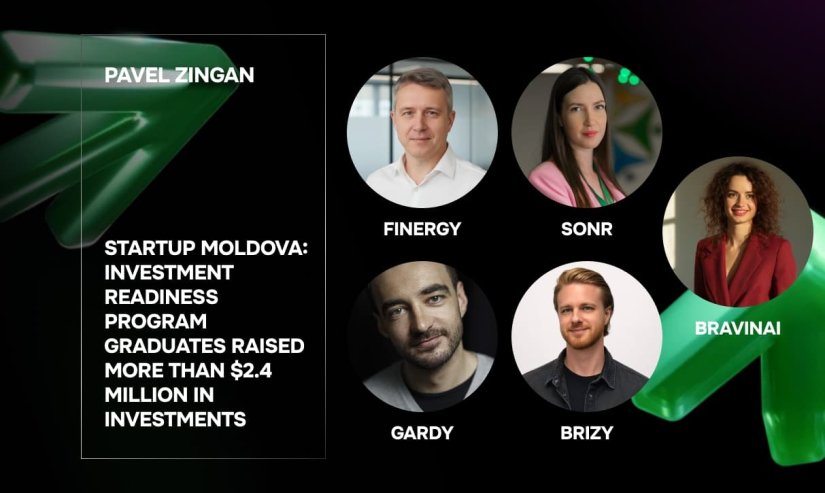

The Moldovan tech ecosystem is transitioning from an idea-accumulation stage to a phase of mature deals. A key catalyst for this process has been the Investment Readiness Program (IRP), implemented by Startup Moldova with support from the Ukraine-Moldova American Enterprise Fund (UMAEF). The project has served as a bridge between ambitious products and the stringent demands of international venture capital.
The Role of Startup Moldova: Architects of the Ecosystem
For Startup Moldova, this program was a logical continuation of its mission to transform Moldova into a regional IT hub. Acting not just as an organizer, but as a connecting link between founders, the state, and investors, the platform has created a unique environment for growth. Within the IRP, the Startup Moldova team facilitated access to expertise previously available only in major global accelerators.
The main focus was on "investment hygiene": preparing transparent financial models, legal structuring (Term Sheets), and creating professional Data Rooms. Thanks to the program, Moldovan startups gained the ability to "speak the same language" as investors from the US, Europe, and regional funds – a critical skill for scaling businesses beyond national borders.
Heroes of Phase II: Five Vectors of Innovation
Midway through the program, a group of five startups demonstrating the highest growth dynamics and readiness to attract capital was highlighted.
- Finergy (miaPOS): A fintech solution that radically simplifies payment acceptance for small and medium-sized businesses. Integration with the MIA instant payment system allows entrepreneurs to use miaPOS to accept payments via QR codes, eliminating the need for expensive bank terminals.
- BravinAI: An AI-powered platform for deep automation of customer experience. BravinAI implements "smart" assistants capable of resolving complex customer queries in real-time, significantly boosting business conversion and loyalty.
- SONR: A tech project at the intersection of high technology and professional sports. The company develops innovative audio devices for swimming and water-based training, including an underwater voice communication system allowing coaches to give instructions to swimmers during practice, as well as specialized music players for use in water. SONR products are used by athletes and coaches and exported to dozens of countries worldwide.
- Brizy: A leader in the no-code website builder market. Brizy provides an intuitive visual builder enabling designers and agencies to create high-performance websites without writing code, successfully competing with global giants.
- Gardy: An innovative platform in the personal security sector. The Gardy app allows users to alert the nearest private security patrol with a single tap in a critical situation, combining an Uber-like model with real physical security infrastructure. [Interview with Gardy CEO: On preparing to scale the model to international markets]
Blitz Interviews with CEOs
Interview with Maxim Burdian, CEO of Finergy "On the program's impact on financial strategy"
.jpeg)
How did participating in the IRP help you synchronize the launch of miaPOS with national fintech trends (the MIA system)?
Actually, participating in the IRP was aimed at preparing us to talk to investors and get the company ready to attract investment. We've been working with banks on the local market for over two years, so within the program, we were preparing for expansion into other markets.
For us, it was important that during the program we could communicate with many mentors and investors and learn a lot. If I were to highlight the main lesson we learned – it's that doing a global business actually means doing many local businesses in different countries and grounding your business in each country. And given that we've already done this once for Moldova, doing a global business no longer seems like such a difficult task.
What was the most important discovery during the audit of your financial model by Startup Moldova mentors?
If we talk about what the program gave us, it's probably better to talk about what we would have been like without this program. Before the program started, we naively thought, one might say, that we would go to market, tell investors a promising story, and they would give us money. But after several sessions, including with investors, within the program, it became clear that we need to be what's called "Fundable." That is, the business must show with numbers, with metrics, that the return on investment will be 10X+. I have a close friend who likes to repeat that "one awkward move, and you're a sponsor." None of the investors want to be a sponsor. Being fundable means having very promising metrics. Through the program, we realized we need to work on metrics – that's the main task for quickly advancing towards investment.
How has the perception of your product by local banks and partners changed after completing the Investment Readiness Program?
We haven't seen any change in perception by local banks. But, probably, in working with foreign partners, what changed is how we build relationships and business with them. So, of course, there was an effect. I would note that completing the program was probably aimed at changing our internal processes, at how we view our business through the eyes of investors, and at the changes that allowed us to be more investment-attractive. And, importantly, it should be noted that since the start of the program, our key metrics have grown several times, which, of course, is very pleasing.
Interview with Liliana Cepoi, Co-Founder & COO BravinAI "On mentorship and preparing for investment rounds"
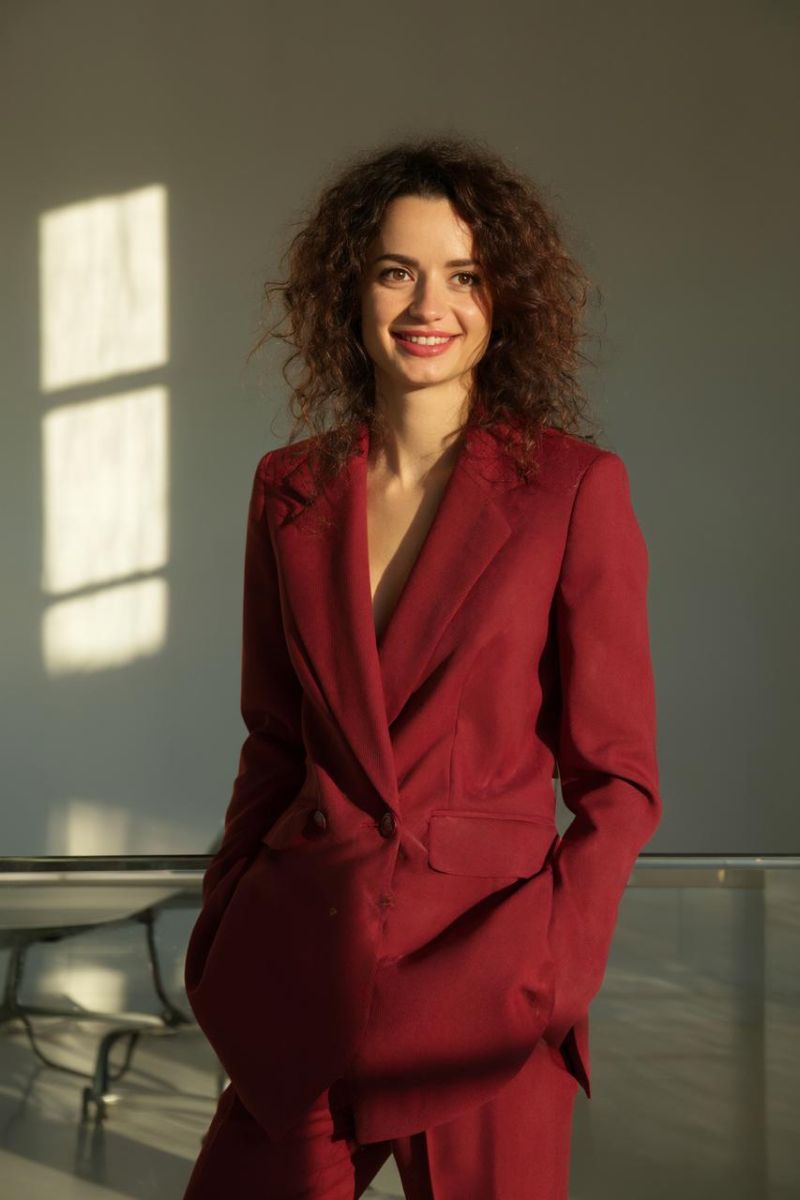
In the AI field, everything changes weekly. How did the program help you "ground" the AI hype into concrete metrics understandable to investors?
When you work in the AI field, it's easy to get caught up in the technology and start talking to investors in the language of models, prompts, and architectures. The IRP helped us make an important shift: stop selling "AI" and start selling the result. Mentors taught us to focus on metrics that truly matter to an investor: unit economics, retention, MRR, customer acquisition cost. We have over 100 paying customers, steady revenue growth, and a completely bootstrapped business – we got here without a single dollar of external investment. But before the program, we didn't always know how to package this correctly. IRP gave us the structure: how to build a financial model so that behind every number stands a growth story, not just hype around artificial intelligence.
What role did Phase II play in the legal structuring of your project for future international rounds?
For us, this was one of the most practical stages. We operate through a Moldovan company in the IT Park, but that's not enough for scaling. It was during the program that we made the decision and opened a company in Estonia – this gives us a European jurisdiction understandable to Western investors and partners. Phase II helped us figure out how to structure this correctly: how to connect the Moldovan operating company with the European legal entity, how to properly draft a Term Sheet, what funds pay attention to during due diligence. Before the program, many of these questions seemed like "for later." Mentors showed us that legal readiness isn't the final step before a round, but a foundation that needs to be laid in advance. Now we have a prepared Data Room, a European structure, and a clear understanding of the next steps.
The five startups in Phase II operate in completely different fields. Did working in one cohort provide something you couldn't get from individual mentorship?
Honestly – this is something I didn't expect from the program at all. You go in thinking the main value is the mentors and investors. But it turns out that founders around one table, each with their own challenges and victories, give just as much. In Phase II, there were five of us, but at the program sessions, there were more participants, and it created a very intense environment. We exchanged contacts, ideas, approaches. Industries were different for everyone, but the challenges were the same: how to structure a round, how to talk to a Western fund, how not to lose focus during growth. We learned from each other in real-time – not from textbooks, but from live experience. And it worked both ways: some adopted our approach to metrics, and we took the best practices for document preparation and networking. Startup Moldova didn't just create a program – they built an environment where Moldovan founders felt for the first time that they were part of something bigger than their own individual product. And that, perhaps, is the most valuable legacy of the IRP.
Interview with Tatiana Cotliba, CEO of Sonr "On entering global venture markets through the program's network"
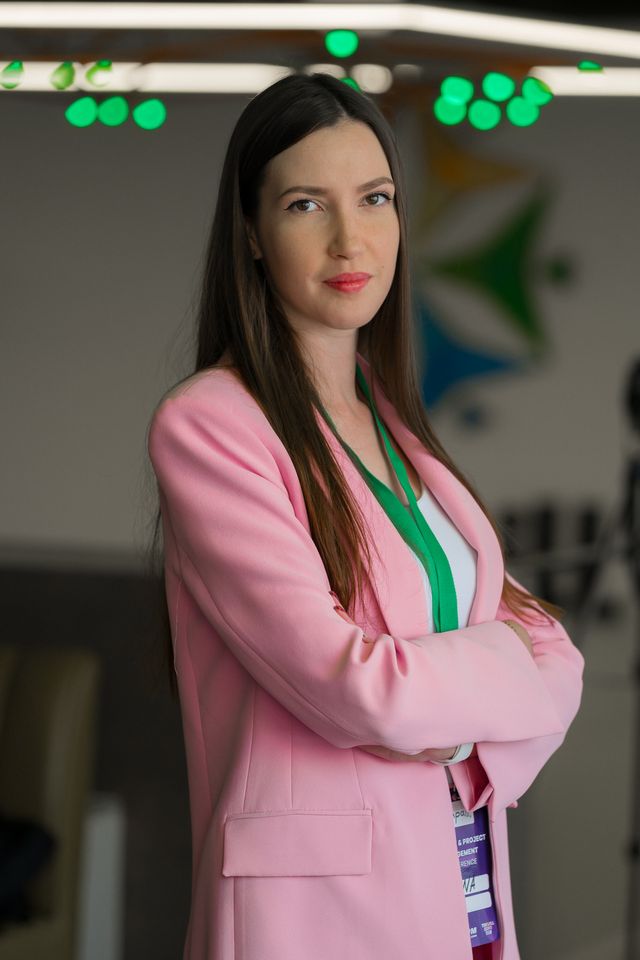
SONR is already present on the global market. What new things did the Startup Moldova program give you in preparing to communicate with Western venture funds?
For us, the key value of the program was the opportunity to structure our investment story according to the expectations of international venture funds. We already operate globally, export our product, and understand our technology and users. But investors look at a company through a different lens: scalability, growth dynamics, go-to-market strategy, and capital structure.
The program helped us reassemble this narrative: articulate the investment thesis more clearly, package the scaling strategy, and prepare materials in a format familiar to Western funds. This is an important stage because even a strong product needs proper investment communication and the necessary level of financial and legal formulation.
How critical was having a prepared Data Room for you, and did the program help put it in "ideal order"?
A prepared Data Room is practically the foundation of trust in dialogue with investors. In early stages, a fund might be interested in the idea and the team, but when moving to more serious discussions, it's precisely the data structure, transparency of metrics, and quality of documents that become decisive.
The program helped us approach this process systematically. We restructured the Data Room to reflect key aspects of the business: technology, market, financial model, scaling strategy, and intellectual property. As a result, it became not just a set of documents, but a full-fledged tool for conducting investor due diligence.
Did the program's 700 meetings help open doors for SONR to funds that were previously hard to reach?
Yes, absolutely. One of the main values of the program was precisely the opportunity to quickly connect with a large number of relevant contacts and valuable recommendations. Even if a company already has international traction, access to venture funds is often built through recommendations and closed networks.
The program's format allowed us to significantly accelerate this process. We had the chance to directly communicate with representatives of venture funds, as well as excellent experts with international experience in the legal and financial fields, which was especially valuable for us. Such meetings are important not only for potential investments but also for getting market feedback – it helps to better understand investor expectations and adjust the strategy for further growth.
Interview with Alexandru Luncasu, Co-Founder & COO of Brizy "On strategic product positioning within the IRP"
.jpg)
How do you assess the value of Startup Moldova's networking for a company that already has thousands of users worldwide?
Networking through Startup Moldova has significantly expanded our opportunities. Participating in various events and programs, we got to know other startup founders from Moldova with whom we can exchange experiences and support each other in the company growth process. In the Republic of Moldova, there are relatively few startups building their own products for the global market, so it's especially important to form a strong founder community. Such contacts help us learn faster, avoid mistakes, and find new development opportunities.
Did the program help rethink Brizy's positioning in the eyes of large institutional investors?
We attracted $2.4 million in investments before meeting Startup Moldova. However, participating in the IRP allowed us to significantly deepen our understanding of how institutional investors think. We met mentors who had previously worked in investment funds and gained valuable insider perspective: what aspects of the business they pay attention to, which metrics are critical for them, and how to properly position the company during negotiations. This helped us better prepare for subsequent investment rounds and build a stronger negotiating position.
What key insight about the "inner workings" of investment deals did you gain during Phase II?
Currently, Brizy is at a stage where, when attracting investment, metrics, scalability, and business economics are increasingly important. One of the key insights from the program was a deeper understanding of the mathematics behind venture capital decisions – what indicators they analyze, what risks they assess, and what conditions they consider acceptable for a deal. This helps us not only better prepare for negotiations but also strategically steer the company's development to meet the expectations of large investors.
Interview with Vladimir Rediba, CEO of Gardy "On preparing to scale the model to international markets"
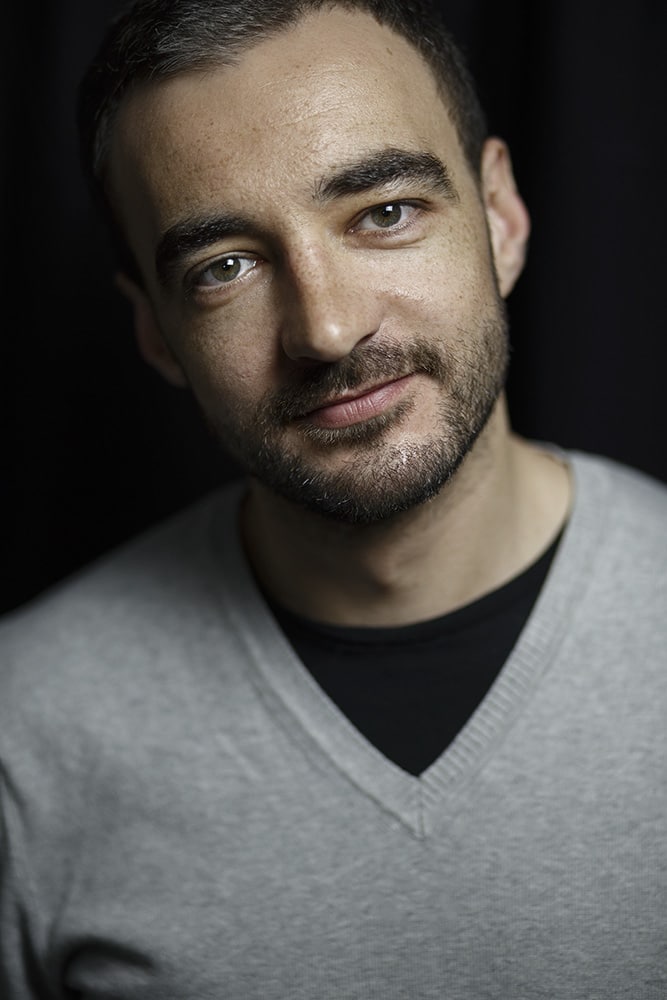
Gardy has been operating since 2020 and reached operational break-even in Moldova without external investment. What does this say about the model – and why is now the time to attract capital?
Moldova was our sandbox. We learned to deliver help genuinely fast: average response time 4.5 minutes, sometimes a patrol arrives in just 2 minutes. We understood how to build partnerships with security companies, how to attract customers with low CAC, how proper pricing makes unit economics positive with high LTV. We validated our algorithm – and all of this on our own. Moldova is proof that the model works. Kazakhstan is the next step. We're testing our scalability hypothesis there and building an operational model that will allow us to enter new markets faster and more confidently. Further growth requires a speed that organic growth doesn't provide – hence the decision to attract investors who open doors.
Kazakhstan is launched, Romania and Poland are in pilot. How do you choose your next markets?
We look at urban density, the maturity of the private security market, and the regulatory environment. We follow news and industry reports, looking for signals where the demand for personal security is growing. We use artificial intelligence to accelerate and automate the routine part of this work. But, honestly, the best way to understand a market is to go and see it with your own eyes. In 2025, we attended conferences and meetings in the USA, China, Estonia, Sweden, Poland, Romania, Armenia, Portugal – we talked to people, observed how the urban environment is arranged, how the police work, how private security functions. We learned a lot about each of these markets – and made concrete decisions: which remain in the plans, and which are not suitable for now.
What did the Investment Readiness Program give you, and what changed in Gardy's strategy after it?
First and foremost – the people. The level of program mentors was exceptionally high: practitioners with extensive experience in venture financing, implementing startup strategies with venture capital involvement, with real connections in the investment world. They worked with us one-on-one, analyzing specifically our case, our tasks, our gaps. The program helped us structure our approach – legally, in terms of investment strategy and sales. We built a step-by-step capital raising plan – it sounds simple, but in practice, it proved very valuable. And most importantly – we emerged from the program with our first real contacts among venture funds interested in investing in Gardy.
Global Results and Success Numbers
The completion of Phase II of the Investment Readiness Program marked a new level of maturity for the entire sector. Statistics confirm that a systematic approach yields measurable results:
- Capital Attracted: Program graduates have already secured an influx of over $2.4 million in direct investments and grants.
- Interaction Intensity: Over seven months, the teams conducted more than 700 meetings with potential investors.
- Educational Layer: Participants received a total of over 200 hours of individual consultations from world-class experts.
- Market Share: Investments attracted by IRP graduates accounted for about 15% of the total venture capital in Moldova for 2025.
The main achievement of Startup Moldova and the IRP has been the formation of a culture of "investment readiness." This is the foundation upon which it will be easier in the coming years for sustainable companies, ready to compete on the global stage, to grow.

 Life Principles


