




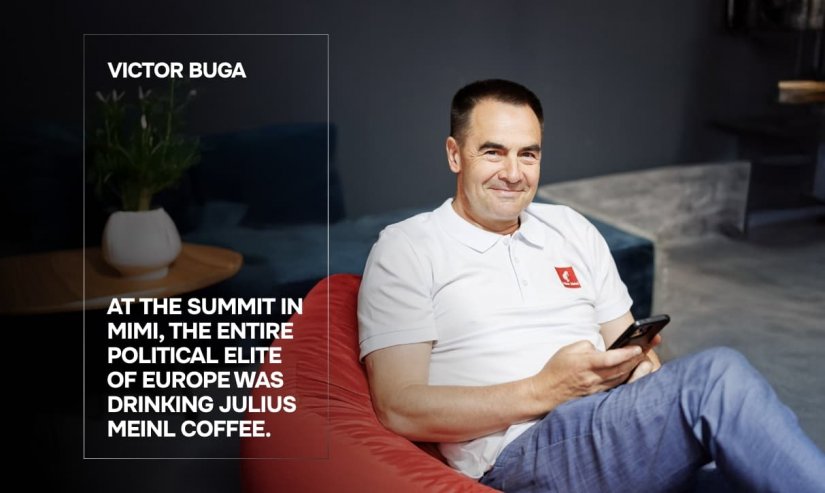

Interview with Victor Buga, Provitus Grup – official distributor of Julius Meinl in Moldova
Victor, good afternoon. We've known each other for ages; I’ve already done an interview about business with your son, but never with you. So I want to take this opportunity and start from the very beginning. I know you’ve been in coffee distribution in Moldova for a long time, I remember Big Deal – the restaurant you and your wife used to run, but those are just fragments of the puzzle, and I’d love to see the full picture.
So, where do we start?
We always remember our firsts. So let’s start with my first job. It was 1984. I had just graduated from the Soviet College of Commerce in Chișinău. Of course, it may sound funny now, but I was genuinely passionate about commodity science – even today I can tell you the chemical composition of many food products I memorized back then. We left that college with a very solid foundation. And naturally, we got placed at the most coveted jobs of that time…
At a trade base, I assume?
Exactly! I was assigned to the bases of the Ministry of Trade, to Moldbăcălia. I was production leader number one, managing the biggest warehouse with the highest turnover.
Not bad for a young guy fresh out of college…
And great experience. So, when Moldova saw the emergence of the first Trade Association that got serious about imports – it was actually the first in the USSR to import foreign cars – I was recommended to join. Imagine, people from Moscow and Leningrad came to Chișinău to buy new foreign cars. Not to mention the boom of “video combos” and imported washing machines.
Being a commodities expert in such a company was cooler than being a minister…
I wasn’t a commodities expert, I was an engineer for transport and forwarding operations. Transport, wagons, containers – that was my job. It was incredibly interesting; I discovered a whole new world. And then came the 1990s…
Yeah, back then things could change overnight…
That’s exactly how it was. One day, everyone was making vodka but forgot about activated charcoal for filtration – so you could sell several truckloads of charcoal with a 150% markup in a month. Then, Romanian businessmen would show up looking for paper, and you’d start hunting for paper, which would end with you supplying cellulose to a paper mill to get access to scarce paper in return. A suppliers’ directory could become your golden ticket into the world of unconventional deliveries and trade deals.
That era is best summed up by a joke from the time – two businessmen meet: one is looking for a wagon of firewood, the other is offering it, they shake hands and close the deal. Then one goes off to find the firewood, and the other – the money.
That’s exactly how it was. But I was lucky. The chaos of trade deals, with no rules or knowledge, where randomness and connections mattered most – somehow turned into the best business school I could have imagined.
Did you go back to study?
No, I got hired by Coca-Cola’s office in Moldova.
I didn’t even know you worked for Coca-Cola…
I got tired of the lack of structure around me. I wanted to understand how business is run in a global corporation like Coca-Cola. I saw an ad that they were looking for a procurement manager. I applied. Got called in for an interview. The interview was led by the CFO. After an hour and a half, he called in the Sales Director, and together they offered me a job in sales. In the end, after a few years, I became the Commercial Director for Coca-Cola Moldova.
Quite a career!
Quite the education. Where else but Coca-Cola would I have met Greg Sand, one of the founders of merchandising? Before him, hardly anyone thought seriously about how to display products on shelves – and no one had tried turning it into a science. At Coca-Cola, I finally discovered structure in work and was exposed to a truly high-level business culture. You could say Coca-Cola was my MBA.
But when we met, you were already in coffee (not yet Julius Meinl) and running the Big Deal restaurant. Connect the dots for me between Coca-Cola and that.
After the Moldova office, I also worked at the Coca-Cola office in Moscow for a while – a very lucrative contract. But that meant I gave up my spot in Moldova, and when I came back to Chișinău from Moscow, I didn’t return to Coca-Cola.
What did you do instead?
My wife and I took over a large food venue – placinte, national cuisine. When it became clear that we wouldn’t be able to buy the place, we decided to open our own restaurant. We found a space on Eminescu Street, invested all our money – plus borrowed funds – and opened Big Deal. Later, I was offered the chance to go into coffee distribution – and my Coca-Cola background played a big role. That’s when we started moving toward Julius Meinl.
Did they approach you or the other way around?
Me. After Coca-Cola, I wanted to work with another structured partner, so I started researching the coffee supply market. At that time in Moldova, Lavazza and Illy were the top brands, and I knew I needed something just as strong.
And that turned out to be Julius Meinl?
As always – a chain of coincidences. Remember the Julius Meinl store on Ștefan cel Mare in Chișinău? Back when the company had its own retail network?
Of course. A big deal. Right at the start of Ștefan, near the Inturist Hotel.
I used to go there all the time to buy ice cream for the kids – it was flying off the shelves. So the brand was already embedded in my subconscious. We also had a lot of business ties with Austria – another connection. Then a friend of mine suggested I take a closer look at Julius Meinl as a coffee brand. Our region was under the Romanian office at the time. I made the call, went for a meeting, presented a business plan – not just scribbles, I spent nights on the calculations. They approved it, I put together my first team – four people – and we did our first import.
When was this?
Summer 2010. The team had two agents, a barista, an accountant, and me. Our first sale was to Ecosport Gym.
To Vlad Roșnov? He still serves Julius Meinl to guests – sometimes he brews it himself.
We taught him during the pandemic. And the invoice to Ecosport Gym – invoice #1 – is still framed and hanging in our office by the entrance. I’ll never forget our first three clients: Ecosport, Pegas, and the Cristis beauty salon.
Not sure about Cristis, but at Pegas they still serve Julius Meinl coffee. Impressive stability! How many people are on your team today?
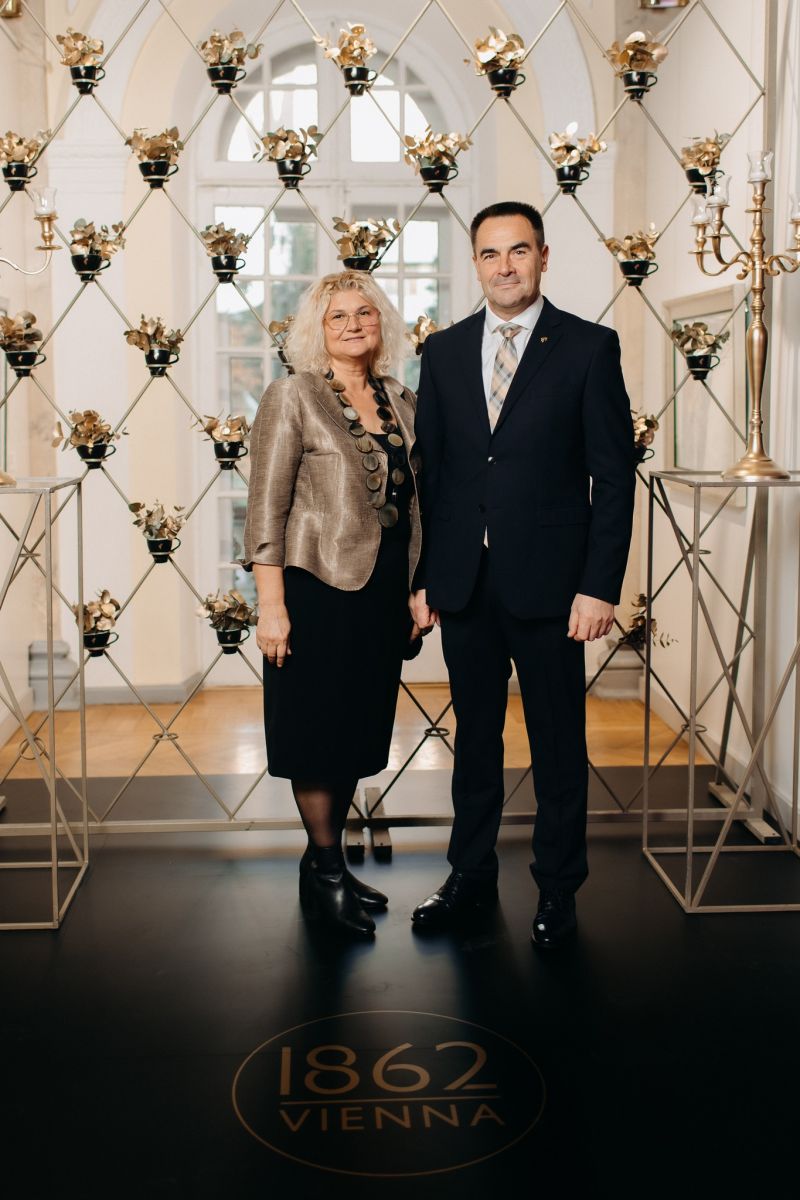
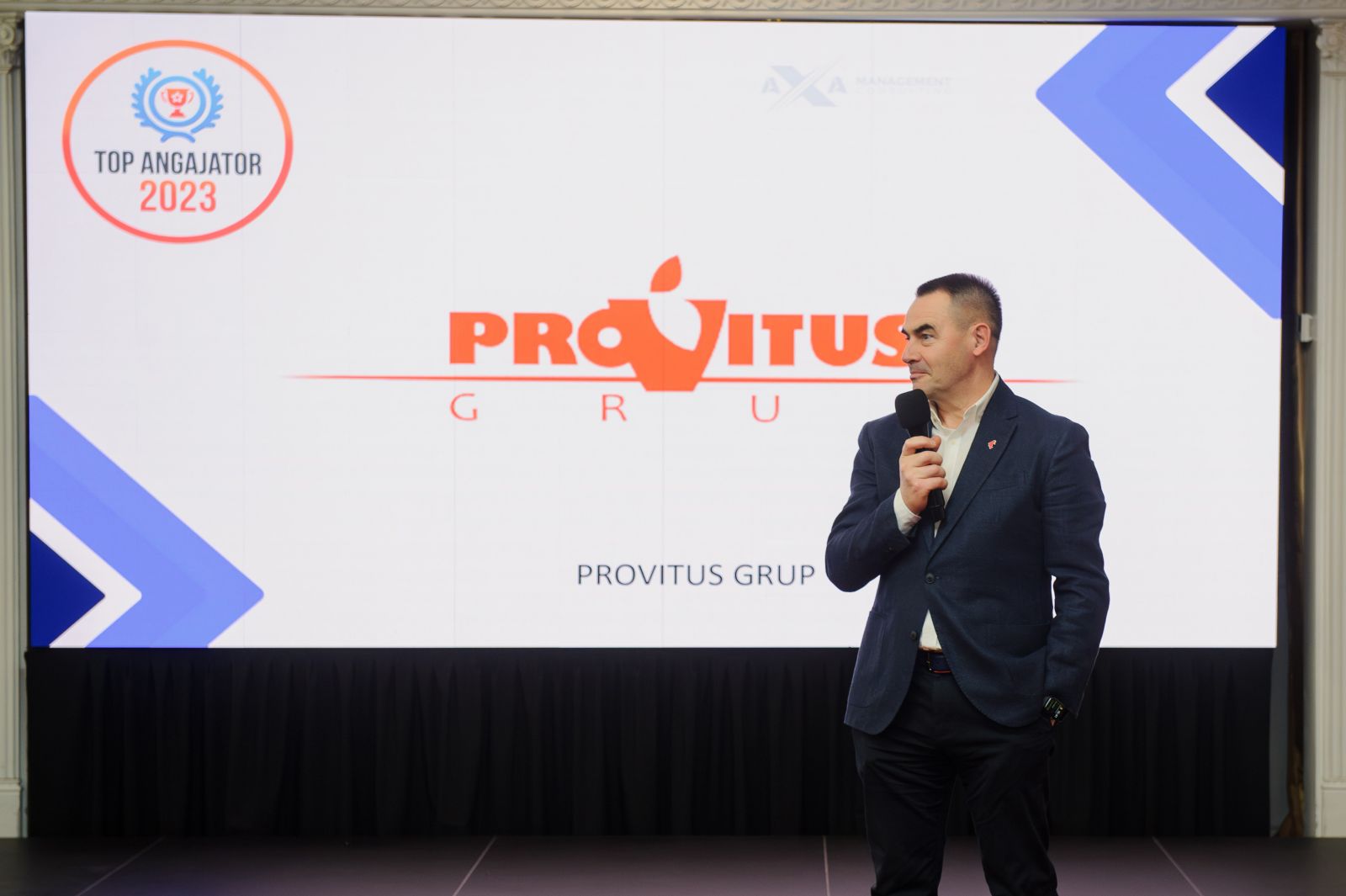
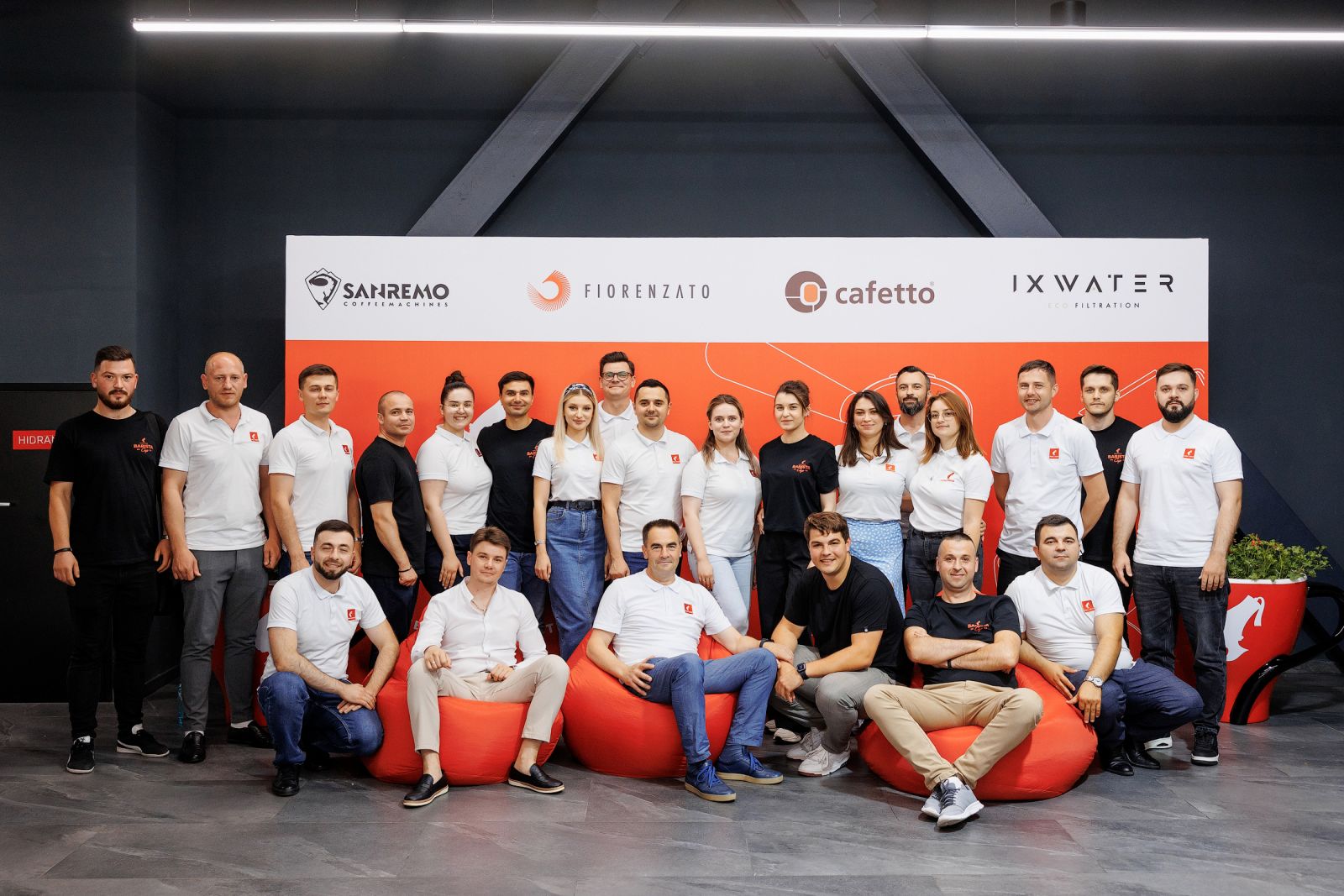
Today – 50. What I’m truly proud of is the Best Employer Award. In 2023, we made it into Moldova’s Top 10 Employers. The other nine were giants – 200, 500, 1000 employees. And us. I once joked to our HR manager that we should aim to make it into the Top 100 companies in Moldova for employee work conditions. And suddenly – we weren’t in the hundred, we were in the top ten!
Congratulations! And what about clients – how many HoReCa “locations” do you currently serve, since that’s your main direction?
At the moment, about 1,200 locations. That includes both HoReCa and the office segment, which is also well developed for us.
What about retail?
Before the pandemic, we didn’t touch it at all. But then we realized we needed to change strategy and diversify our sales channels. So in the past few years, we’ve been very active in retail too.
And events? It feels like Julius Meinl’s signature presence is at events. I see you most often at high-level ones. What’s the biggest event you’ve serviced?
Remember the Aviation Day celebration at the airport?
I do.
We handled that unprecedented guest flow. We had 10 serving stations there.
A record?
Nope. At the EU Summit in Mimi, when political leaders from across Europe came, we had 14 stations. The planning started three months in advance. We had to order an additional €30,000 worth of equipment to meet all the requirements. But now we’re ready to service any level of event – we’ve got the experience.
Oh! I forgot to ask you about the most memorable cup of coffee in your life! That’s a tradition now – I asked Christina Meinl, and your son too. So I’m asking you.
There were several. I remember right before the pandemic, a big delegation from Julius Meinl came to Chișinău – top management and regional managers from across Europe. We had meetings, a visit to Cricova, and on the last evening, around 11 PM, we walked into La Plăcinta, near the Opera and Ballet Theater. The CEO of Julius Meinl ordered a cup of espresso, drank it, closed his eyes and said, “Victor, I’ve never had such a delicious espresso!”
What a story…
And I remember another one. Back in the USSR, I served in the army in Lithuania, in a paratrooper training division – I trained scouts for airborne forces.
You were a paratrooper?! Still have the striped shirt? Did you jump?
The shirt’s gone, but I did 24 jumps. I had one leave during my service, came home and brought back a jar of instant coffee – it was rare back then, but I had access to it because I worked at the warehouse before the army. We were preparing for jumps – 3 AM, everyone tired. I thought: let me treat the officers to some coffee. But there was no hot water – just army-style tea. So I just mixed the instant coffee right into the tea. It was the most aristocratic morning before a jump – a morning scented with coffee.
I can totally picture that…
I’ve collected a lot of coffee stories over the years. I remember when the pandemic started and only four of us were at the office, I decided to donate a coffee machine and a stock of coffee to the doctors at the Infectious Disease Hospital – back then, they were working like soldiers on the front lines, around the clock…
I remember. How could you forget…
We went there without announcing anyone. We didn’t know who to talk to. It felt wrong to send someone in – it was scary, after all, it was the epicenter. So I pulled up my mask, picked up the machine and the coffee and tea, and walked around the grounds to find someone to give it to…
Alright! Let’s come back to today – I see your stories won’t be ending soon. What are Julius Meinl’s plans for 2025?
Simple: to work. What drives me is that a small local company can work according to multinational standards. What matters to me is that our clients are happy with the results, and that my team feels cared for and proud of what they do.
That’s the best kind of plan. Whatever happens in the coffee market or the world – what kind of day is it without a cup of coffee, right?

 Life Principles


