




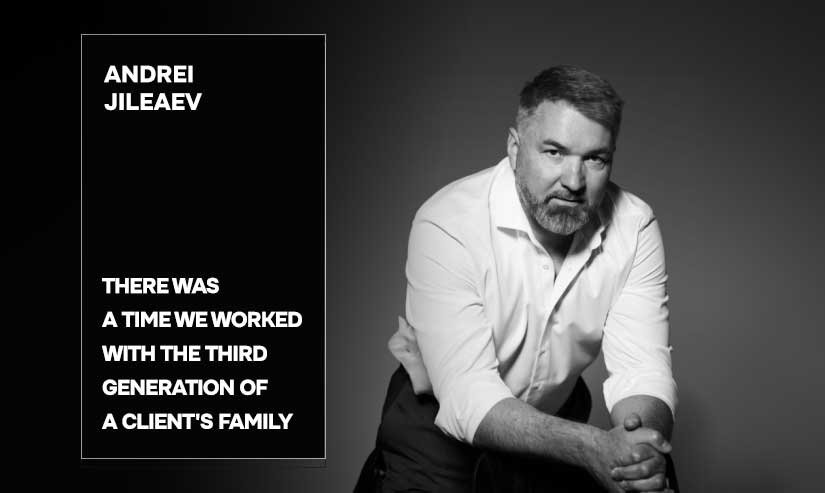

Interview with Andrei Jileaev, owner of Indelit
We met Andrei Jileaev recently at the Moldovan Kyokushin Karate Championship. He was there to support his son. One thing led to another, and I found out that Andrei himself took up karate two years ago—and that he also runs a company called Indelit.
After working with architects and designers for over five years, I’ve come to know pretty much every major player in the construction materials market here in Moldova, including the stone suppliers. Indelit, especially considering its warehouse capacity, is clearly one of the market leaders.
So, of course, I had to set up a meeting and interview with Andrei. I wanted to see Indelit’s warehouses and production with my own eyes.
Andrei, good afternoon. I firmly believe that success in business comes down to two things: people need to know what you do, and they need to trust you. Let’s start with the first—awareness. I know that Indelit specializes in working with stone. But "stone" is a broad term. Can you walk me through what exactly you focus on?
With pleasure. Broadly speaking, we supply four types of stone to the Moldovan market: marble, granite, quartz, and what in Russian is typically called “spekchyonny kamen.” But most professionals here in Moldova, myself included, prefer to use the English term—“sintered stone.”
Is it correct to say that the best marble comes from Italy?
Without question. The Italians are the trendsetters in the marble world. It makes sense—regions like Carrara and Verona have been mining and processing marble for thousands of years. My favorite marble, “Statuario,” is Italian. The word itself translates roughly as “stately,” which perfectly captures the elegance of this stone—low porosity, high durability, and a refined texture. Statuario is probably the only marble that’s truly that white, with a soft white base and those signature gray veins.
But let’s not fall into the stereotype that only Italian marble can be expensive or refined. When Indelit shifted focus to stone back in 2005, like many others in the market, we started with Turkish marble. But we’ve since moved away from it, mainly due to quality concerns.
Yes, when I first went to Italy—and for several years after, I was flying there more than ten times a year—I was deeply impressed by the professionalism of their stone workers. They are definitely the leaders in the marble world. But it’s not just because Italy has the best marble. The stone business has become very international. Brazil, India, and China are now recognized exporters of stone, both in raw blocks and in slab format. In fact, I’d say that up to 75% of the stone processed in Italy today is imported, which doesn’t make it any less valuable.
So even Chinese stone, which people often criticize, can actually be high quality?
Not just can be—it is. For years, there was a stereotype that Chinese stone was like cheap Chinese goods. But just like China surprised everyone by becoming a leader in electric vehicles, the same thing has happened in stone. The country has really stepped up, and today Chinese companies are producing top-quality materials.
What’s your current import geography for marble?
Italy, India, China, Spain. Occasionally we bring in shipments from Egypt too—sometimes they have interesting batches. In the marble—and granite—industry, there’s an unusual rule that doesn’t apply to most other businesses: the larger the batch you need, the more expensive it can be.
Wait, what do you mean? The more you buy, the better the deal should be, right?
That’s true for many things, but here we’re talking about a natural material. You can easily buy, say, 100 square meters of Calacatta. But if you need 10,000 square meters for one project, you might simply not find it—or you could spend years sourcing it. That’s actually one of the reasons sintered stone is gaining ground in the market. It’s not cheap, but it offers predictability. A manufacturer can produce the exact volume you need.
Let’s get to sintered stone in a second. But first, a question that’s almost naive—like asking who’s stronger, a whale or an elephant. Marble or granite? What should someone choose?
That’s up to the client. A marble kitchen countertop will stain—from red wine, even from white. There are ways to restore the surface, but that’s extra work. Still, some clients believe marble has antibacterial properties, or they’re okay with the natural aging of the stone. They go for marble, even though granite doesn’t have those downsides.
Let’s put it this way—granite is more utilitarian. There are granites out there that cost more than many types of marble. So the choice between marble and granite really comes down to the client. There’s also quartz—a very beautiful, durable material. We often recommend it for kitchen countertops. But it does have limitations. We don’t recommend using quartz for heated floors or outdoor projects. When exposed to heat, quartz can warp. It contains a small percentage of resin, and once it bends, there’s no way to get it back to its original shape.
Sounds like now’s the right time to ask—what exactly is sintered stone?
In essence, it’s a high-tech version of ceramic. We process it the same way we do stone, using the same machines, and it behaves like stone. The difference is that marble and granite form in nature over millions of years, under natural heat and pressure. With sintered stone, minerals and stone particles are subjected to extreme heat and pressure during manufacturing—with no resins or binders used. That’s why the Russian term “spekchyonny kamen” (sintered stone) makes sense, even if it doesn’t sound great—it gets the idea across.
Alright, we’ve covered stone. Can we move on to your warehouse?
Sure. Our warehouse is designed first and foremost around client needs. Of course, we also work by special order. But our current inventory is large enough that any architect or designer—either alone or with their client—can come and choose their stone on-site, by hand.
We handle all the stone processing in-house—from cutting and bonding to installation. And there are designers who like to be personally involved in the production process. That’s fine by us. If a professional wants to oversee how the veins or color patterns will flow in the finished product—we’re all for it.
In the 19 years we’ve been in business, I think just about every professional in the market has visited our warehouse. Moldova is a small market—we all know each other. I like to think our reputation has grown, partly thanks to the fact that we always have a wide selection of stone in stock.
There was even a time when a client came to us as the third generation of their family. We had worked with his grandfather, then his father, and now with him.
Yes, I’ve heard people speak highly of you—Elena Grecu, Elena Agafonova, Vladimir Pînzaru, Yulia Sîrbu. All of them have been featured in my interviews with architects and designers.
That’s honestly the nicest thing you could’ve said. Client trust is our biggest asset.
Andrei, if we shift from talking about your company to talking about you personally—I have to say, with your age in mind, I’m genuinely impressed. I only know two people who took up such a tough sport as Kyokushin karate later in life. And of those two, you’re by far the older one. How old were you when you started?
Forty-nine.
Why? That phase of life where you feel the need to prove something seems long past.
Well, back in the day I did a few years of boxing. After that, like everyone else, I tried to stay in shape. I’ve been diving for over 10 years—Egypt, Turkey, Oman, the Maldives. I’ve even done wreck diving. I dove down to the Thistlegorm in Egypt, a WWII transport shipwreck.
As for karate—I took it up to support my son, Ivan. He’s been doing karate for almost seven years now. He started at six. He took a break for a while—every athlete hits a wall at some point. When I talked to him about going back, he said something like, “Well, maybe if you tried it...”
So I ended up training with the same coach as him—Traian Velixar. And I genuinely enjoy both the training and the sparring. I recently earned my blue belt. And I don’t think getting a black belt is unrealistic at my age. The beauty of Kyokushin karate is that anyone can practice it at any age—keep progressing, keep building experience.
Then I’m holding you to two promises: invite me to the 25th anniversary of Indelit, and to your black belt exam. I know Traian—I think he’ll let me in as a journalist.

 Life Principles


