




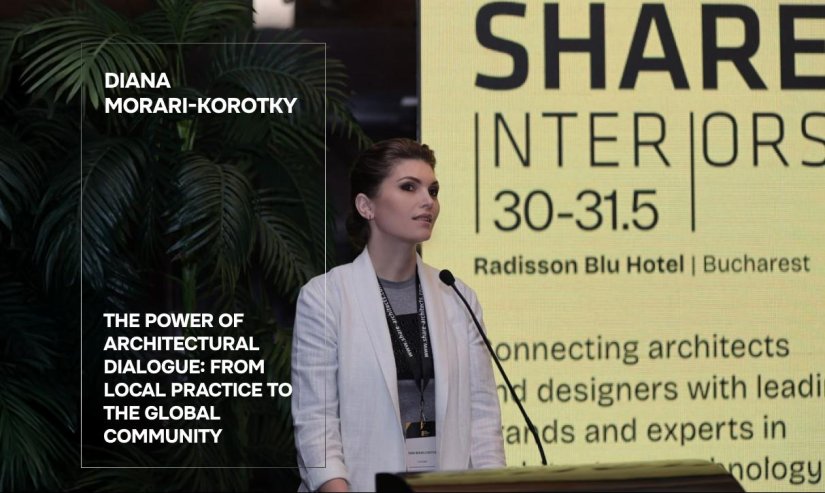

Interview with Diana Morari-Korotky, Co-Founder & CEO of ARCHiTYPE architecture & design, Architect, member of UARM, member of the World Architecture Community, member of SHARE Architects.
Diana, one of your previous interviews was published under the headline “Efficiency Is More Important Than Popularity.” Do you still stand by this position?
This position remains comfortable for me. I have always been and continue to be focused on project-based work and on architecture as a thoughtful process—one that requires a conscious professional approach and responsibility for the result. As for public visibility, I have found a more organic alternative for myself: integration into international architectural communities. It is precisely there, through collaboration with renowned international architects, that professional dialogue is born and truly valuable opportunities emerge.
Beyond project work, the international professional environment has become an important part of your activity. What has it given you?
Self-realization and a new experience of interaction. International communities are spaces of continuous learning, growth, and knowledge exchange. There, architecture ceases to be local and begins to resonate as part of a global process.
Which international forums and conferences have you participated in?
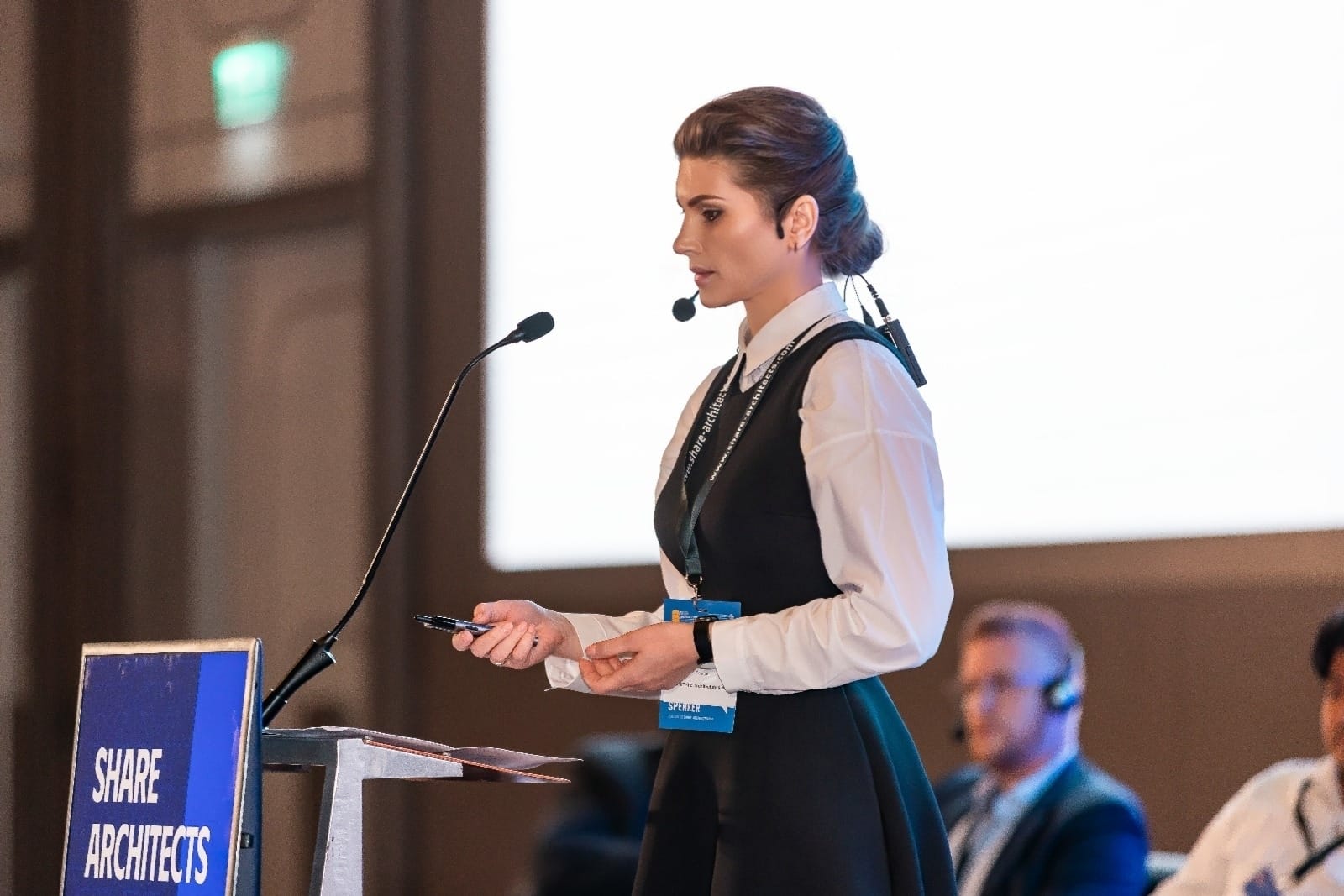
Over the past two years alone, the geography has become particularly extensive. Among the key events, I would highlight: SHARE Interiors Forum, Bucharest (May 2024) — the largest professional event in interior design in Romania; SHARE Architects Forum, Chișinău; SHARE X Venice Conference for Advanced Architecture, Venice; SHARE Uzbekistan and SHARE Kazakhstan, Central Asia (September 2025); and the Dornbirn SHARE Architecture Festival 2025, Austria.
Each of these events has become part of a single professional trajectory.
You recently returned from Austria. What impressions did the architecture festival in Dornbirn leave on you?
SHARE Architecture Festival 2025 became a truly large-scale and open meeting of architects, thinkers, and innovators.
The venue itself—the Zumtobel Light Forum—made a particularly strong impression, as did the SHARE Architecture Awards Gala Ceremony, where the nominated project of our studio, Cojushna Residence, was presented. The dynamics of the event ranged from the Spot Light Stage, where projects by our company ARCHiTYPE were presented, to the Live Jury Stage, featuring the presentation of the competition project.
In Vorarlberg, our December days began actively with keynote speeches and presentations, and then shifted to the calm views of Lake Constance and a visit to one of the iconic works of Peter Zumthor.
What makes the SHARE festival unique?
Architecture Awards 2025 represents a “live” competition format: public presentations of competition projects on stage in front of an international jury. After each presentation, jury members engage in discussion with us and ask any questions they consider relevant.
Based on this reasoned dialogue, all projects were evaluated in accordance with the official competition rules. The authoritative jury consists of world-renowned architects and experts known for their contribution to shaping the architectural environment and implementing design innovations, as well as prominent figures in the architectural world. The jury chair is the former Executive Director of the Pritzker Architecture Prize.
.jpg)
Dialogue in architecture. Why is it so important to you?
It was precisely at the conference in Austria that a key idea resonated with particular clarity for me for the first time—an idea articulated by Martha Thorne, former Executive Director of the Pritzker Architecture Prize:
“Projects individually are words. But they gain real power when they are built into a dialogue.”
Individual ideas matter, but it is dialogue that forms history, vision, and strategy. The world does not respond to isolated “words,” but to a coherent statement. Architectural studios united by shared values begin to sound far louder and more convincing.
Why have SHARE Architects become such a significant platform for you?
Today, SHARE Architects is the leading communication platform for the architectural and construction sector in Central and Southeast Europe.
Twenty-eight countries, more than 100 successful specialized events, over 2,000 world-class speakers—these figures speak for themselves and allow SHARE Architects to occupy a leading position.
The core idea of SHARE Architects is to create direct connections between architects, engineers, and developers, offering direct communication channels in the regions where the forums are held, and forming an environment in which architecture can be heard.
.jpg)
As a journalist, I have already collaborated with SHARE Architects when they organized a forum in Moldova, but I am not familiar with their activities worldwide. Could you tell us about SHARE Uzbekistan 2025?
SHARE Uzbekistan 2025, held on September 22–23 in Tashkent, became a bright debut for Uzbekistan. The Urban Development Forum “FACADE DESIGN AND ENGINEERING. DISRUPTIVE TECHNOLOGIES” was an exceptional gathering of thought leaders and practitioners, where projects were discussed ranging from urban planning concepts to the public architecture of the future.
I participated as a speaker with a presentation of projects by our studio ARCHiTYPE on the topic of modular facades—“Modular Innovation and Adaptive Facades: Perspectives and Innovations.” From the Republic of Moldova, the forum was attended by Aurelia Carpov, SHARE Architects Ambassador, who makes a significant contribution to the promotion of SHARE Architects Moldova.
The forum also included exhibitions of innovative technologies, lectures, networking sessions, and thematic panels. A special guest of SHARE Uzbekistan 2025 was Kai-Uwe Bergmann, Co-Founder of BIG – Bjarke Ingels Group, USA.
BIG is one of the most influential architectural firms in the world.
The studio operates globally at a wide range of scales—from furniture to master plans. BIG’s diverse portfolio includes cultural landmarks, infrastructure projects, skyscrapers, and entire urban districts, reinforcing its role as one of the key forces shaping 21st-century architecture.
On the main screen of the forum, your studio’s logo appeared alongside Zaha Hadid Architects. Was speaking on the same stage with such studios a special experience?
Absolutely. In addition to BIG, other leading studios participated in the forum, including Zaha Hadid Architects, UNStudio, MVRDV, MAD Architects, and XTU Architects.
It is a rare opportunity to be within a single professional field where a balanced dialogue between international and local contexts is presented.
Speakers showcase recently completed projects or projects at key stages of development. One of the most memorable presentations was the Alisher Navoi International Scientific Research Centre project—an exceptionally large-scale cultural and educational complex. Notably, this project was designed by Zaha Hadid Architects (ZHA) for New Tashkent and is already under construction.
Large-scale projects were actively discussed at the forum, as well as the future of architecture. What impression did Uzbekistan leave on you?
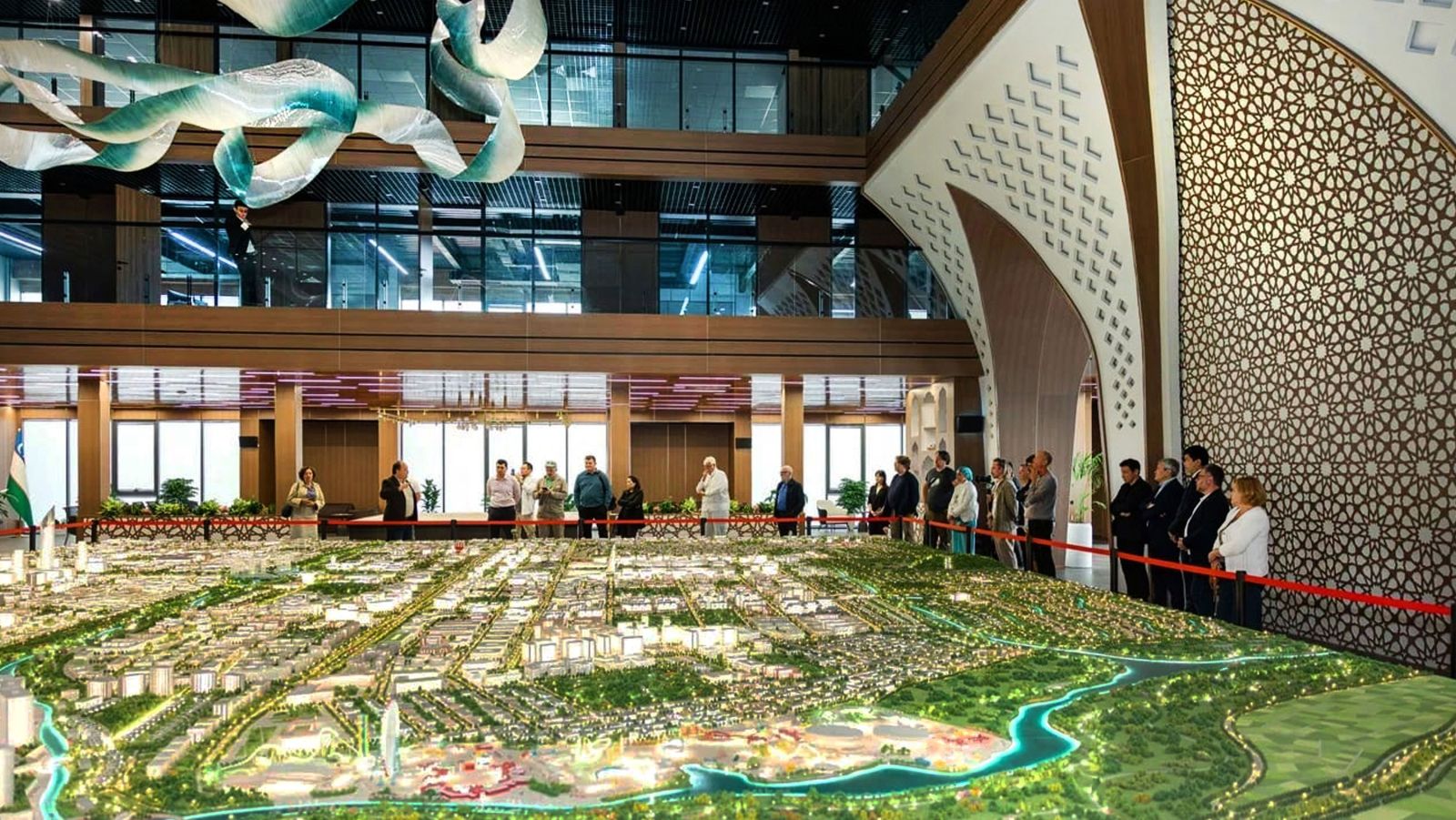
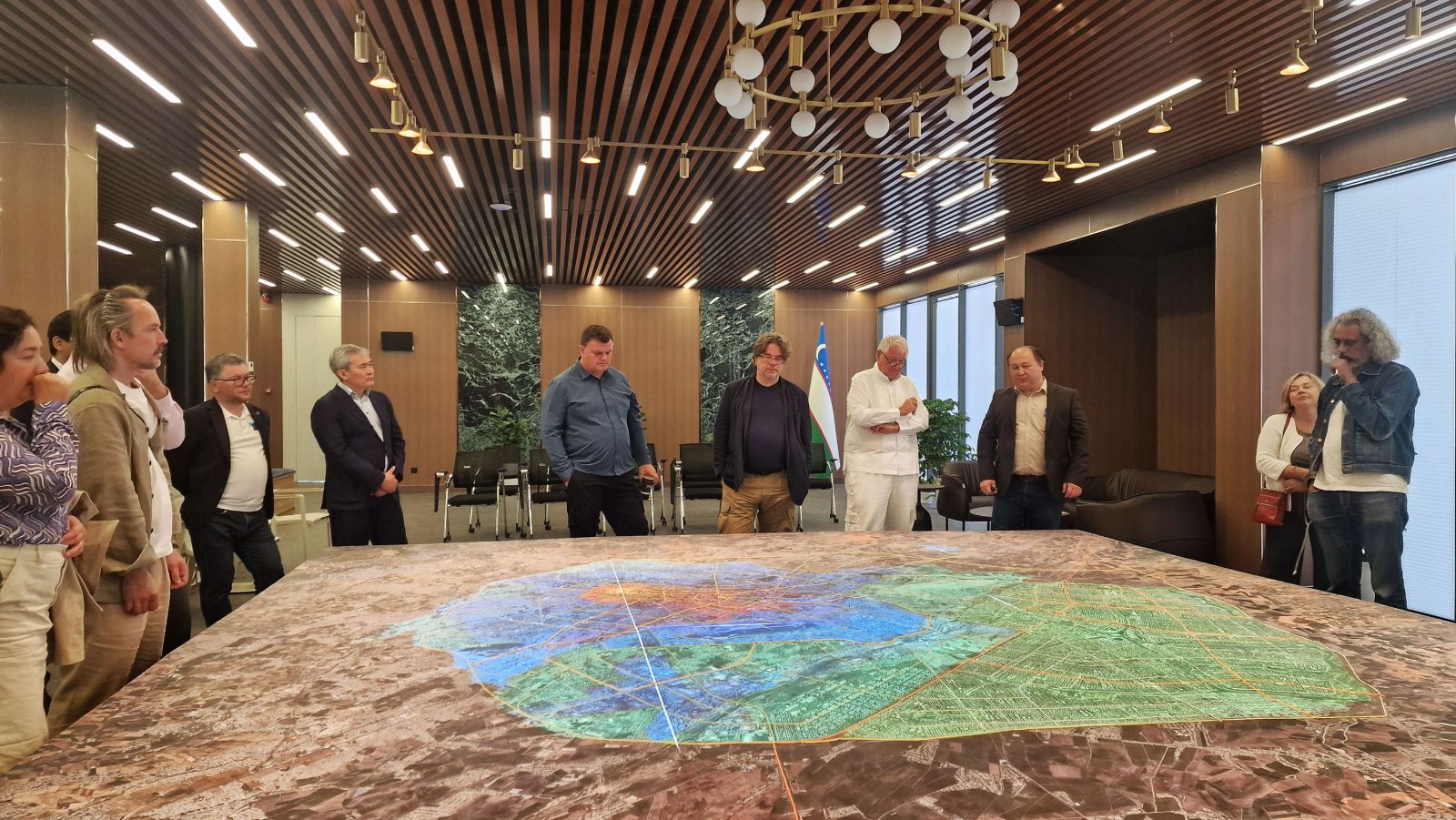
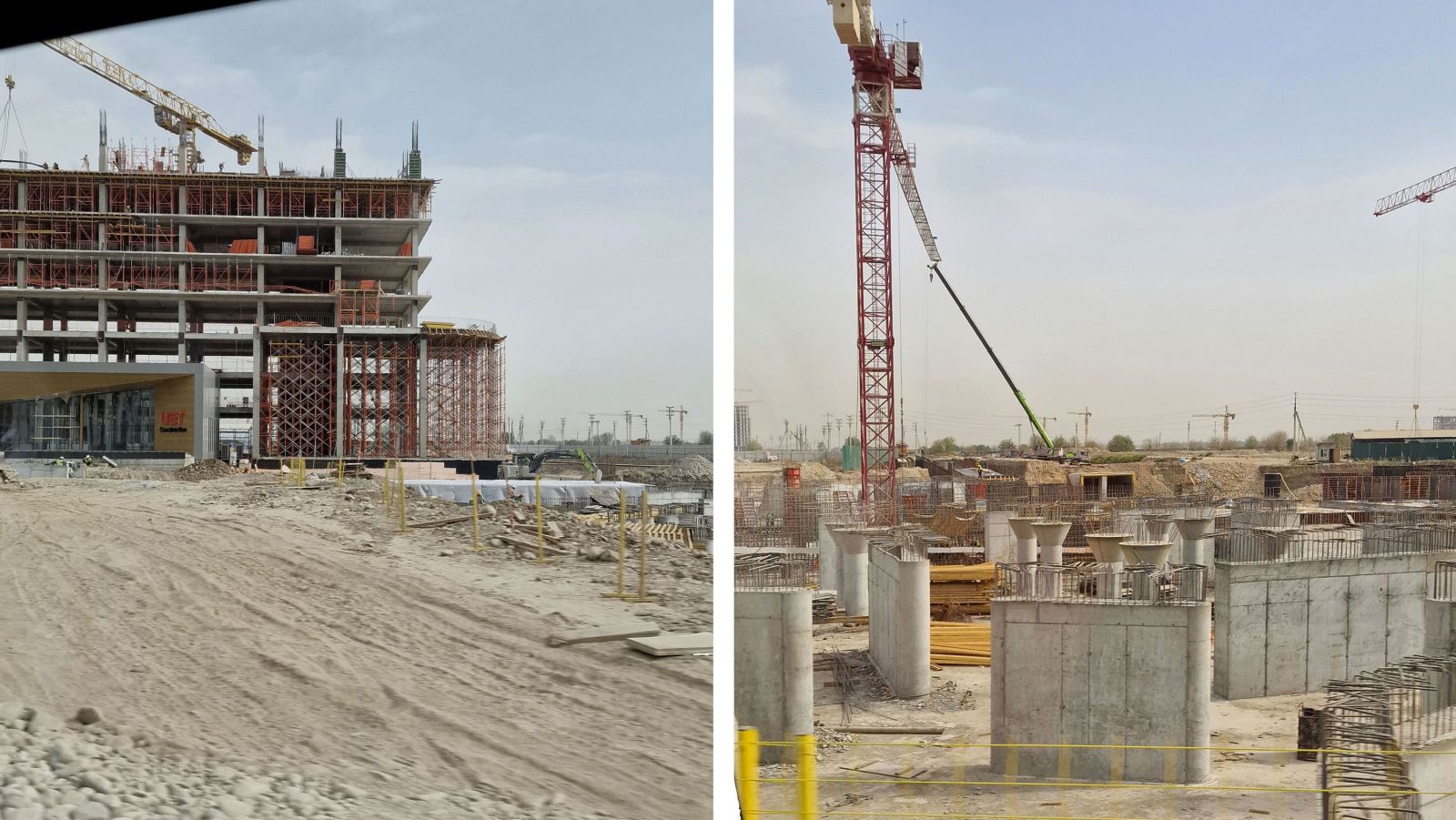
Uzbekistan is one of the most dynamically developing regions. Particularly illustrative is the “New Tashkent” project—an unprecedented urban development initiative involving the construction from scratch of a full-fledged smart city for 1.5 million residents, covering more than 20,000 hectares.
We visited Yangi Toshkent as part of an international delegation. The master plan has already been approved, the city model has been developed in detail, and preparatory works began in 2024. The project is being implemented as part of a strategy to decentralize and relieve the existing urban core. The master plan of Tashkent, including the “new city,” was developed with the participation of international urban planners, architects, and environmental specialists. The key principles are sustainability, multifunctionality, and greenness.
This is an example of a systemic approach to sustainable development, where architecture becomes a tool for shaping a new culture of urban life. Such experience may be useful for other countries as well, including Moldova.
.jpg)
Is there still room for the individual in large-scale projects?
This is one of the most important questions. And my answer is yes.
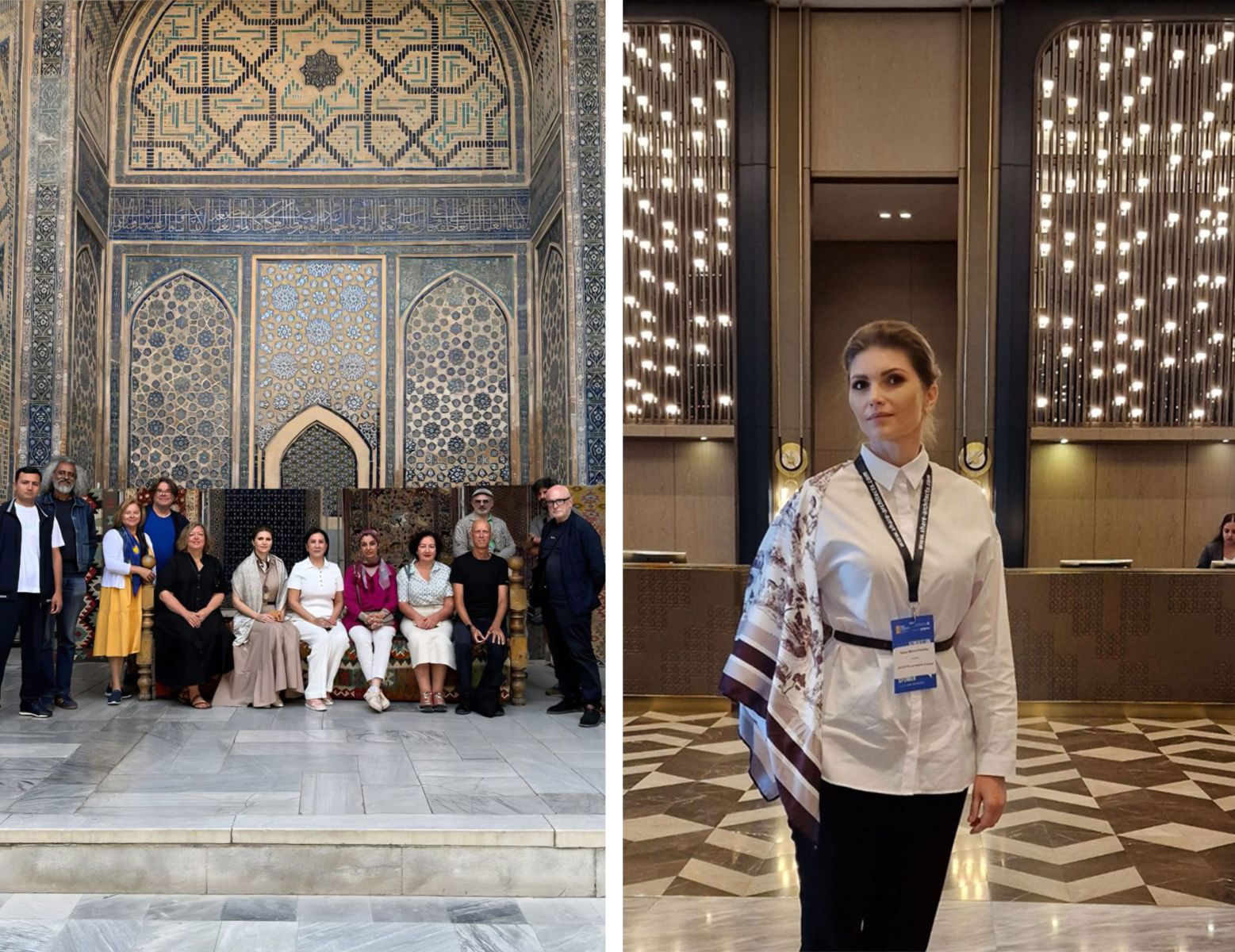
The SHARE Community uniquely combines the scale of thinking with human warmth. Symbolically, during the Central Asia tour, I celebrated my birthday for the first time not with my family, but within a professional community—and it felt truly familial. The people who create the cities of the future remain people who value attention, respect, and friendly interaction. Beyond the forum program, we shared beautiful moments together with the international group in Bukhara and Samarkand.
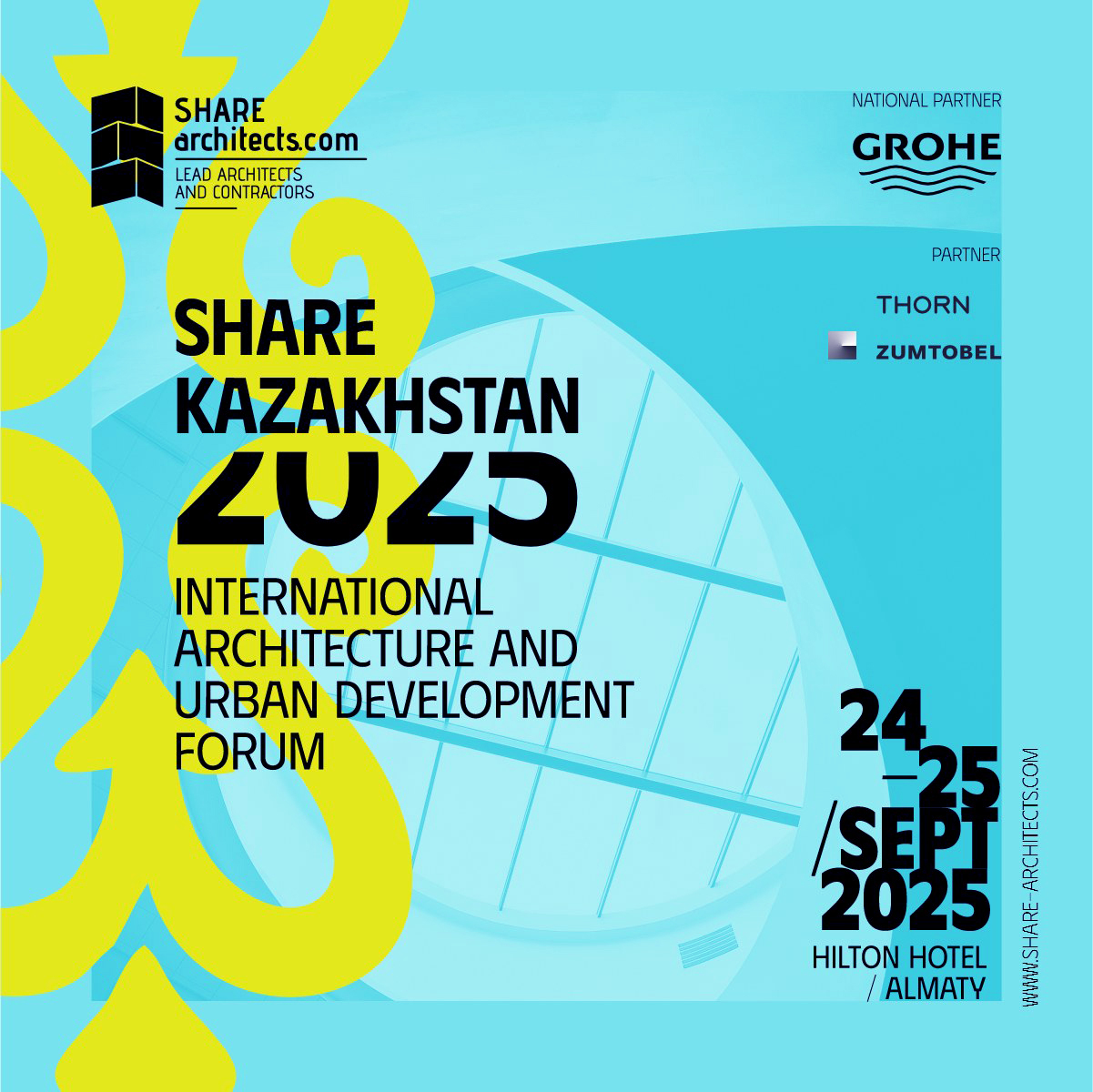
After Uzbekistan, you continued your participation in forums in Kazakhstan. What stood out to you about the forum in Almaty?
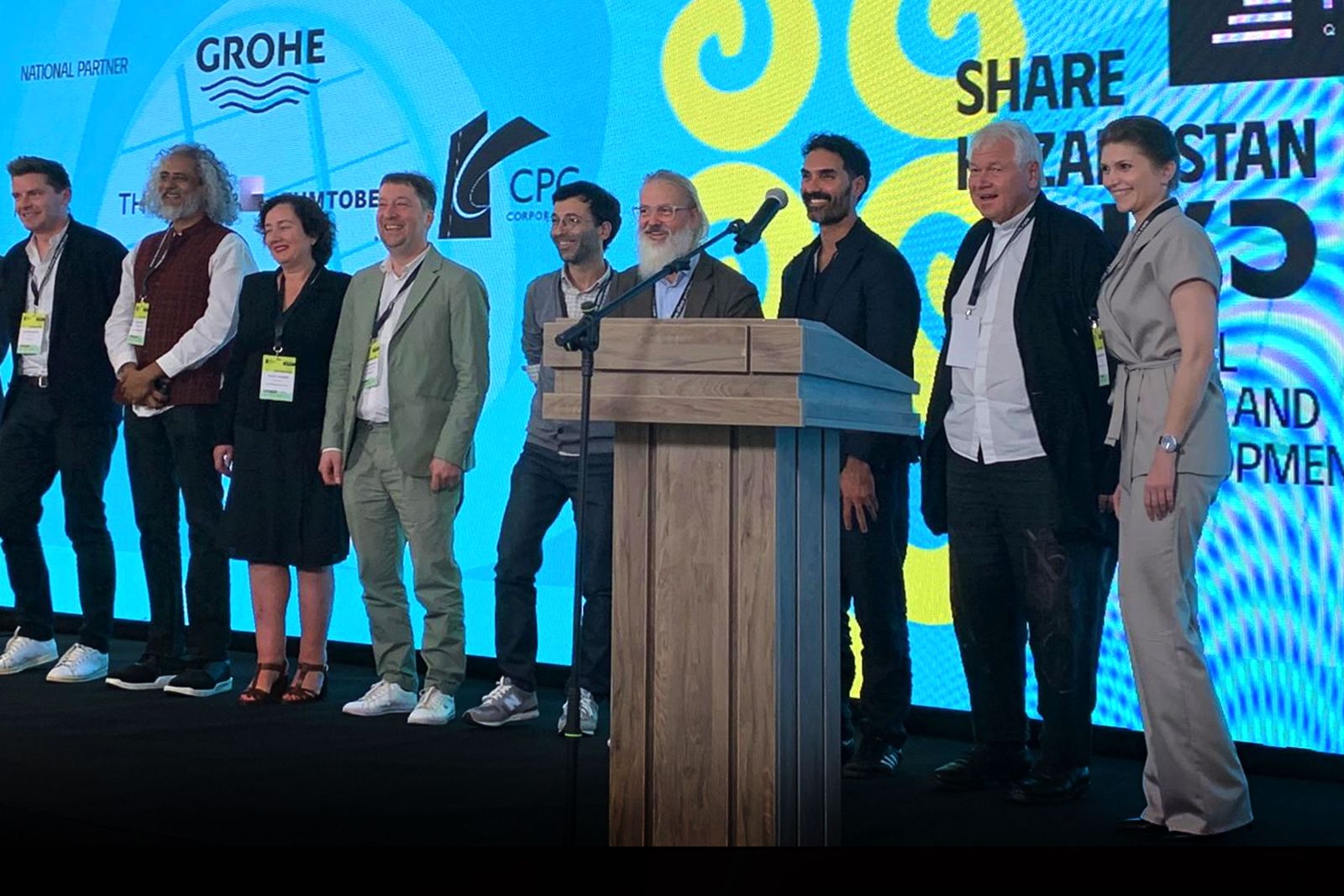
In Almaty, discussions focused on human-centered urbanism, adaptive reuse, and the dialogue between past and future. Inspiring lectures and conversations, networking around the layering of architectural narratives, and a rethinking of continuity. There was a critical perspective on how architecture can serve as a mediator between cultural layers, sustainability, and innovation.
.jpg)
In your view, what do architectural forums offer?
SHARE forums are spaces where architecture gains a voice and people gain the opportunity to hear one another. They are not merely lectures, but communities that shape the direction of the profession’s development. For me, it is meaningful to be part of such a movement.
It is a rhythm of ideas, dialogues, and cultures—architecture in context: living, precise, and meaningful.
My live interaction with such an outstanding group: Peter Murray, Co-Founder of New London Architecture Society, Chairman of the Temple Bar Trust, Founder of the London Festival of Architecture (UK); Rainer Schmidt, Founder of Schmidt Landscape Architects & Urban Planners (Germany); Simone Sfriso, Co-Founder of TAM Associatti (Venice, Italy); Iman Gawad, Vice-Dean of the British University in Egypt, Councilor and Chairperson of the Habitat and Environment Commission of the Africa Union of Architects (AUA); Anouk Legendre, Co-Founder of XTU Architects (France); Kai-Uwe Bergmann, Co-Founder of BIG – Bjarke Ingels Group (USA); Paolo Matteuzzi, Director at Zaha Hadid Architects (UK); Askhat Saduov, Architect and Director of the “Research Institute Almatygenplan” LLP (Kazakhstan); Saidazim Sharipov, Advisor to the Director, Directorate of New Tashkent (Uzbekistan); and many other prominent architects.
Is there practical value in such dialogue?
Absolutely. One notable example is the international Voronet Park project, which brought together 14 renowned architects to collaboratively work on a complex consisting of 14 unique buildings. For the implementation of each project, teams were formed, and in August 2024 our company was also invited to join one of them.
This is a beautiful confirmation that dialogue in architecture leads to real projects and new formats of collaboration.
With what mindset do you begin 2026?
I am ready to continue my professional journey without noise, but with a voice.
Let us conclude with an announcement of an important event for Moldova.
In February 2026, Chișinău is expected to host the international SHARE Chisinau Forum. Within the framework of the conference, architects and international speakers with outstanding projects will take the stage, along with global leaders in innovation and construction technologies. It is high-level professional networking that will continue to shape the professional architectural dialogue in the region.
SHARE Architecture Awards Festival in Dornbirn, Austria
.jpg)
.jpg)
.jpg)
.jpg)
.jpg)
.jpg)
.jpg)
.jpg)
SHARE Interiors Forum in Bucharest, Romania
.jpg)
.jpg)
.jpg)
.jpg)
SHARE X Venice Conference for Advanced Architecture
.jpg)
.jpg)
.jpg)
.jpg)
SHARE Uzbekistan - International Architecture and Urbanism Forum, Tashkent
.jpg)
.jpg)
.jpg)
.jpg)
.jpg)
.jpg)
.jpg)
.jpg)
SHARE in Kazakhstan - International Architecture and Technology Forum, Almaty
.jpg)
.jpg)
.jpg)
.jpg)
.jpg)

 Life Principles


