




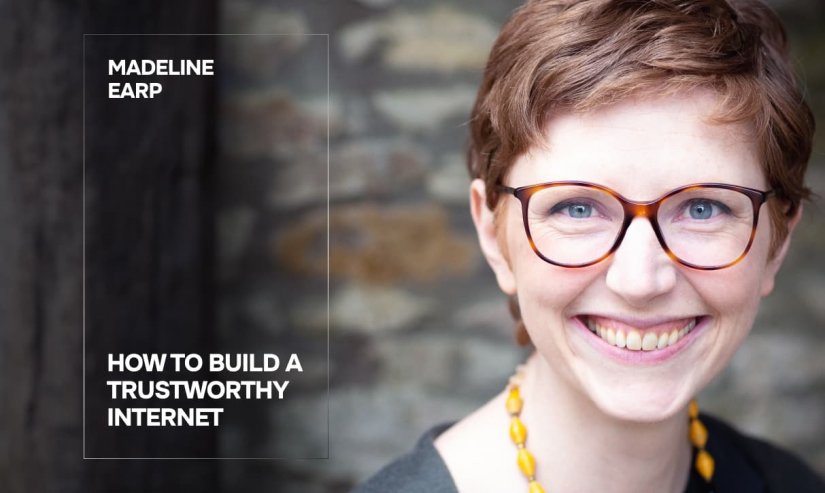

Interview with Madeline Earp, Public Interest Tech Consultant at International Media Support
I first heard about her in passing — “Madeline might be coming to Chisinau for the summit... she works with internet infrastructure.” Infrastructure? I thought: sounds like wires, servers, and boring analytics. But after the first minute of conversation, it was clear — here was someone who not only studied how things work, but also rethought why they were designed that way in the first place.
Madeline Earp is a consultant, researcher, and human rights specialist in the digital age — someone who knows exactly how an honest voice should sound, even in the noise of algorithms and under censorship.
Madeline, thank you for agreeing to this conversation. I’ll start simple: how do you usually introduce yourself?
My name is Madeline Earp. I’m a consultant and researcher. I work in the field of the internet and human rights. That includes freedom of expression, censorship, surveillance, and how we can create digital spaces that serve society.
I help people and communities interact with governments and companies, using the internet as a tool — not a threat. That sounds simple, but in practice it’s constant work with boundaries — visible and invisible ones.
And how did you come to this? It sounds like something born out of inner conviction rather than a career plan.
It definitely wasn’t a plan. I started with China — just because I was learning Chinese. And China was a fascinating example of a country where people used the internet very creatively — to bypass government restrictions, connect with the outside world, or try to solve problems in their local communities.
That creativity, and the fact that we didn’t fully understand the threats and vulnerabilities of such online interactions, drew me into this field.
Later I worked with the Asia team at the Committee to Protect Journalists — first with journalists in China, then in other countries in the region. That’s when I started asking questions: if someone publishes information about what’s happening around them, are they considered a journalist? Who protects them in that case? And who puts them at risk?
Then I worked at Freedom House — there I worked on the Freedom on the Net report, which measures the level of internet freedom in different countries. We evaluated: can people speak, can they be heard, and is that right under threat?
You went from specific cases in China to working with the global system. Today you’re at IMS. Tell us what kind of organization that is and what you do there.
IMS (International Media Support) is an international organization based in Denmark. We support independent media in countries where working as a journalist can is especially hard. Not because there are few journalists — often, it’s the opposite: they’re there, but they need resources and protection to help their communities thrive.
I work on the Public Interest Technology team. We look at internet infrastructure again and ask: does it help journalists, or does it get in their way? Could this infrastructure — in the event of a change in government or global shifts — be resilient enough to protect independent media?
We don’t just criticize technology. We look for where and how it can work in the public interest. In Moldova, by the way, we also have a program. Right now, my colleagues are gathering data and analyzing how resilient the Moldovan digital environment is, and whether there are areas that can be strengthened — through joint efforts of government, business, and civil society.
At the same time, we don’t want the whole conversation to boil down to the influence of Russia, the U.S., or China. We want to imagine a model that works in the interest of the local population.
You have to act as a kind of bridge between journalists and technical experts.
Yes, I’m not a developer. But I know how to ask the right questions. I help people understand what technologies they’re using and what’s behind them.
I used to record interviews on a voice recorder, take handwritten notes, back everything up on another device just in case… And now there’s an AI secretary. It’s amazing. But we have to be very clear: who is this secretary? Where does the information go? Who has access to it?
Metadata can tell you as much as the conversation itself: where you were, with whom, when, how long. That’s especially important if you’re a journalist working on sensitive topics. Then invisible vulnerability becomes a real threat.
Everything you’re talking about requires a clear set of values. What values are at the heart of your work?
I studied literature. From the start, I was interested in how to speak clearly and convincingly about things that matter.
I started working in human rights because of the risks people were facing for doing that — for example, in China — someone would simply talk about what happened in their community, and they’d be punished for it. That struck me as unjust.
I have a strong sense of justice. I believe everyone should have the opportunity to be heard. We should all be able to express ourselves in spaces where we’re accepted and valued for who we are.
The internet has given us so much: resources, support, communities. Sometimes it literally helped people survive. But now we often talk only about threats. I think we need to keep the balance. Don’t demonize technology. And don’t idealize it. Just work to make it serve people.
That’s exactly the logic behind the Good Commons project, as I understand it.
Good Commons is an attempt to unite the local community building initiatives you’ve never heard of Tanzania, Moldova, the Philippines…IMS partners in these places are developing projects with both human and tech resources that truly solve problems.
Someone’s using Bluetooth instead of the internet. Someone’s building a local forum for village-level discussions. Someone’s creating an anonymous platform where people can talk about what’s happening in their area.
These projects don’t get enough attention. They lack resources. But they’re already doing what people in Brussels or San Francisco only dream about — creating trust, safety, and engagement.
We want to bring them under one umbrella called Good Commons — give them visibility, funding, and connections. And include them in the global conversation about what quality digital environments should look like.
That’s why we’re very interested in Moldovan innovation projects — especially those with a community component, where citizens can communicate with each other or with a particular sector — business, government institutions, or communities.
I know you’re already doing this — through the New Public platform, for example. You recently published an article about “Swahili Wikileaks.” Can you tell us more?
Yes. New_Public is an American project to improve social media. I wrote a case study for them about a project in Tanzania. Journalists have called it Swahili Wikileaks. People share sensitive information, but do it through a team of editors who consider the risks and operate based on trust.
It’s a project built on responsibility. It’s small compared to Big Tech, but effective. And I wanted to showcase it as an example of how not everything important happens in big corporations. Sometimes change starts in the backyard. But to be noticed — it needs a voice.
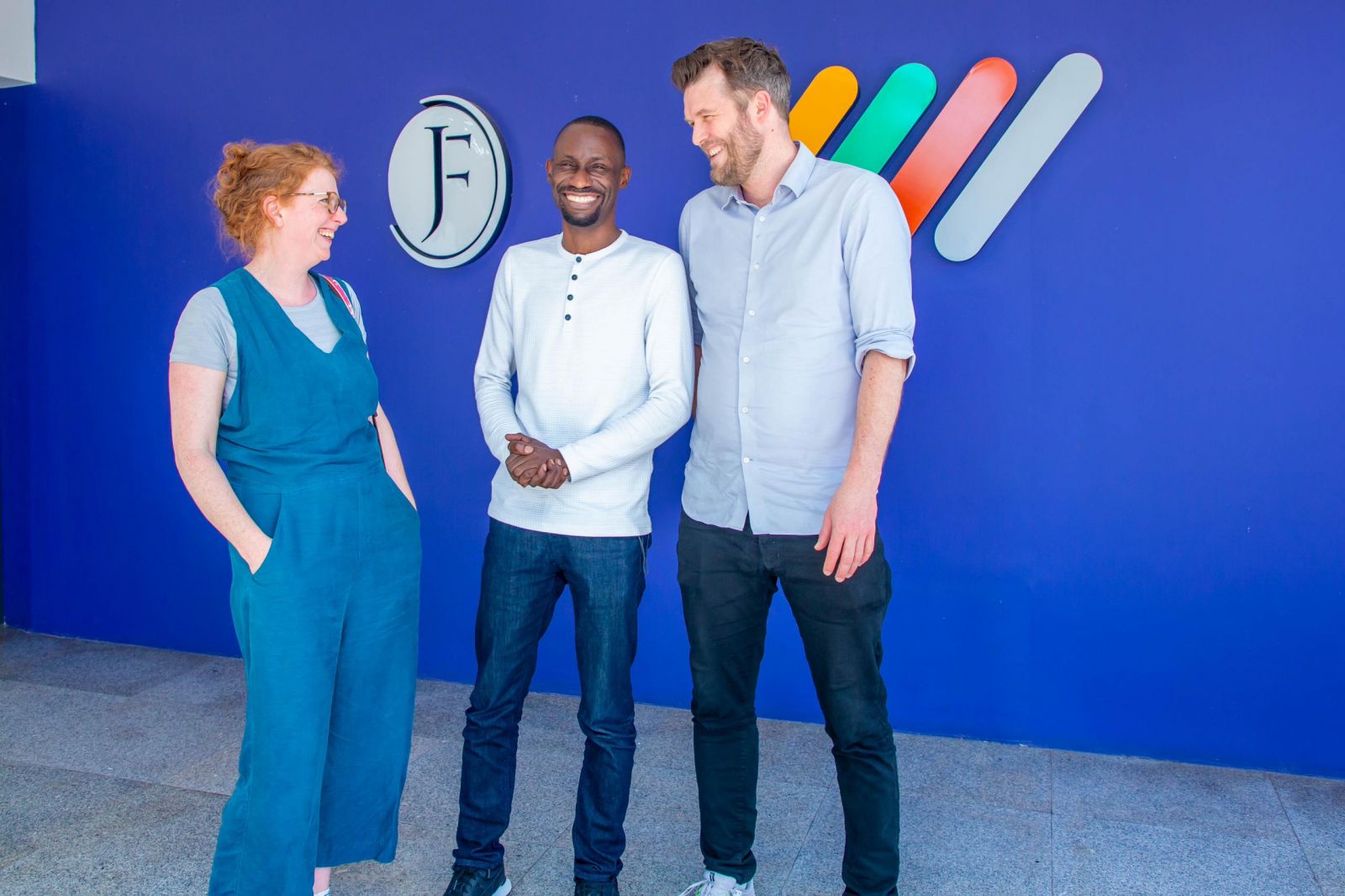
Madeline Earp, Maxence Melo, and Magnus Ag, courtesy of JamiiAfrica
You say: “Visibility is opportunity.” That’s something we also believe. Because when someone works in isolation, it’s easy to lose faith. But when they see others, they find strength.
Exactly. We can’t always solve the problem immediately. But even just knowing you’re not alone can give you the impulse to keep going.
We hope that strength lies in unity. And if we show that opportunities exist beyond the tech giants, people will start to see them as real alternatives. Not like now, when it’s easier to say: “Oh, well, they won’t be able to compete anyway.”
Thank you, Madeline. This was a deep conversation. You give a voice to the unheard, and help those voices become part of the global conversation. I think that’s the real meaning of the digital age.
Thank you. It was important for me to talk to you because I feel you believe in this too. And conversations like this give hope.

 Life Principles


