




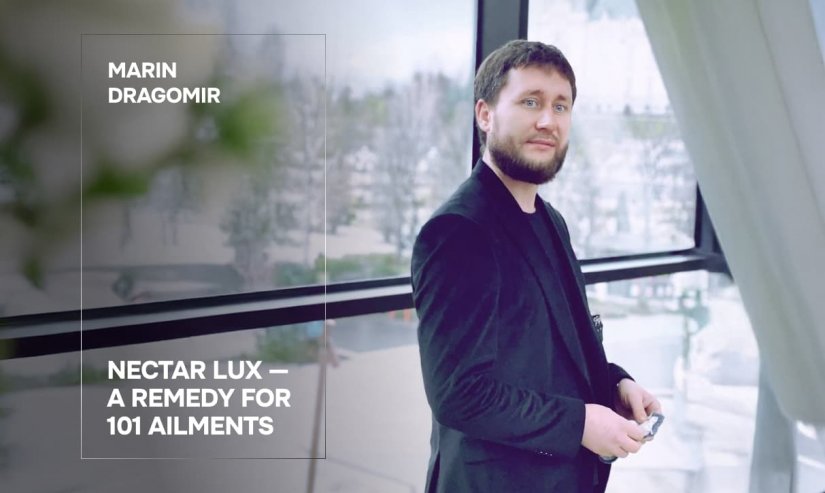

Interview with Marin Dragomir, founder of Nectar LUX.
Marin, in a previous interview you shared the story behind the creation of Nectar LUX. Time passes, and our view of the past often shifts. How do you see those early steps now?
Honestly, looking back, I’ve come to appreciate those early days even more than I did at the time. Back then, it was a mix of excitement, uncertainty, and a sincere desire to create something genuinely good. We didn’t have all the answers, but we were clear on one thing: we wanted to bring high-quality, natural, and pure bee-based products to the market—products that didn’t just support healthy eating but actually improved people’s health.
Now I see how crucial persistence was, along with our belief in the mission and the support from those around us. Every challenge in those early years turned out to be a valuable lesson that helped us grow stronger—as a brand and as a team. And I can say with full confidence: if I had to start all over again, I’d choose the same path.
Is this a family business?
Yes, it’s a family venture. From the very beginning, we worked with people close to us who share our values: respect for nature and a passion for beekeeping. My family has always been my backbone, and that warmth and closeness are felt in everything we do at Nectar LUX.
You became the first producer of cold-processed creamed honey in Moldova. Why did you choose this specific technology?
Traditional methods of making creamed honey involve heating, which destroys enzymes, antioxidants, and other valuable compounds in honey, reducing its benefits. We chose cold processing because it preserves the natural properties of honey and freeze-dried fruits. This method lets us precisely control crystallization at the right temperature, so the product keeps a smooth, creamy texture. At the same time, it retains the biologically active compounds that give honey its antibacterial and digestive benefits.
We wanted to create something innovative and healthy, with real taste and a delicate texture—no compromises. Creamed honey is the result of a gentle process that respects the integrity of bee products and gives the consumer something more. For Nectar LUX, this was a natural step, fully aligned with our mission: to deliver top quality and innovation in every jar.
You recently introduced a creamed honey with propolis. My grandmother used to say that propolis was a miracle cure for 101 illnesses. How did the idea come about?
Your grandmother was absolutely right! Propolis is a powerful natural antibiotic. It contains over 300 active compounds, including flavonoids, phenolic acids, and essential oils. It has antimicrobial, antiviral, and anti-inflammatory properties. We wanted to create a product that naturally supports the immune system. Unlike alcohol-based propolis tinctures, our extract contains no alcohol, so it’s safe for children and for those who avoid alcohol altogether.
Sounds like a real natural medicine. Have you thought about selling it through pharmacies?
That’s exactly what it is—a natural remedy, just in a delicious jar. Yes, we’ve definitely considered the pharmaceutical route. Propolis is scientifically recognized for its antibacterial, antiviral, and anti-inflammatory properties. Combined with high-quality honey, it becomes a functional product with real health benefits.
We’re already exploring partnerships with pharmacy chains, especially since more and more consumers are looking for effective, natural solutions. Our goal is for this propolis creamed honey to be more than just tasty—it should become a trusted ally during cold season and beyond.
But propolis isn’t the only valuable bee product, right? Beekeepers work with more than just honey.
Absolutely right, propolis is just the beginning. Bees give us a real natural pharmacy: royal jelly, pollen, bee bread, bee venom — all of them have remarkable properties. We’re already working on expanding our product line and want to offer the market functional products that combine these powerful ingredients in a form that’s accessible and enjoyable for consumers.
For example, we’re planning creamed honey with royal jelly, special formulas for immunity or energy, and supplements made with freeze-dried bee products. Our goal remains the same — to keep nature alive in our products and turn it into real health solutions.
What’s the scale of your production?
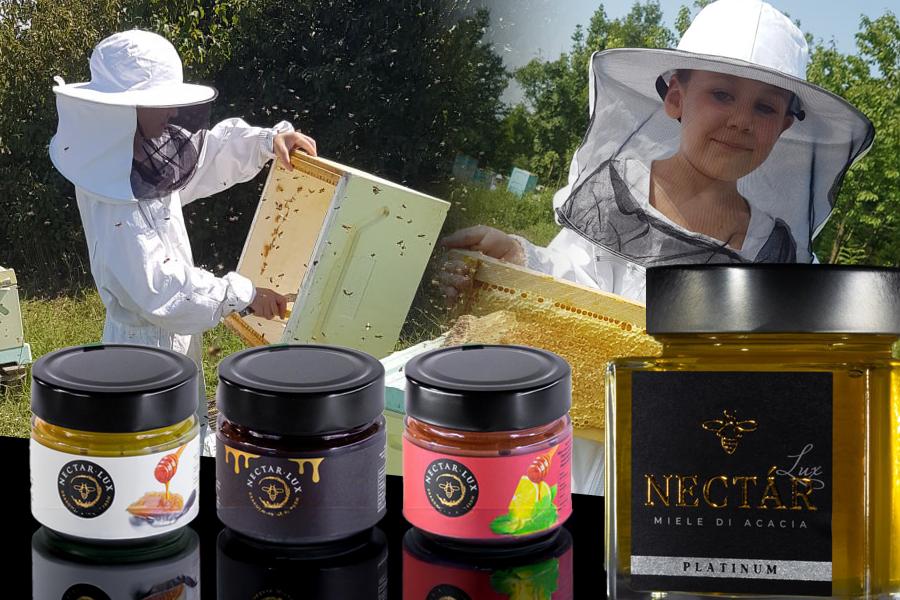
Depending on the season and weather, we maintain between 250 and 500 bee colonies. We know nature can be unpredictable, so we place our apiaries in different regions of Moldova — from Florești to Fălești. This helps minimize the risk of poor harvests. If nectar collection is weak in one area, conditions might be perfect in another. This model allows us to maintain consistent quality and output.
In addition to honey, we also sell bee colonies, beeswax, and royal jelly. In 2023, our exports dropped due to geopolitical instability, but in 2024, we resumed shipments and are continuing to grow our export capacity.
We’re also seeing that it’s getting harder for individual beekeepers to keep up — equipment costs are rising, and proper quality control requires serious investment. That’s why we decided to create a producers’ association — Api Bio Product.
What’s the main goal of the association?
The main goal of Api Bio Product is to support and promote responsible, high-quality beekeeping in the Republic of Moldova. We want to build an environment where beekeepers can collaborate, grow their businesses, and gain access to information, modern technologies, and sales markets — including international ones.
At the same time, we aim to educate consumers about the real value of bee products and the importance of bees for the ecosystem. It’s about building a strong community where beekeepers don’t feel like they’re facing the challenges alone.
What are your main export markets?
Our primary market is Romania, where we have a major wholesale partner we supply with honey in barrels. At the same time, we have our own company in Romania through which we sell jarred honey under the Nectar LUX brand. This dual presence gives us broad coverage and lets us meet both industrial and retail demand.
We also export to France — we have a strong partnership with a network of small shops that show great growth potential, and our products are sold under our brand. In Italy, we’re focused on online sales — through our own webshop and various e-commerce platforms.
Do you prioritize quality over volume?
Yes. We’re certified to European standards and we carefully control quality at every step of the production process. Every new product is tested in accredited labs in Germany — such as FoodQS and Intertek. We’re growing steadily, but never at the expense of quality — that’s our golden rule at Nectar LUX.
Does honey have any lesser-known benefits most people aren’t aware of?
Definitely. Most people think of honey as a natural sweetener or a remedy for colds, but it offers so much more. For example, honey has prebiotic properties — it supports a healthy gut microbiome. It also contains active enzymes that aid digestion and help with cellular regeneration.
There’s another interesting thing — honey helps calm the nervous system. Eating a little bit of honey in the evening can actually promote deeper, more restful sleep. And when used topically, honey has wound-healing and antimicrobial properties. It’s even used in natural dermatology.
These are the kinds of things we’re trying to talk more about — so people can rediscover honey not just as a traditional treat, but as a truly functional product.
What are your plans for 2025?
In 2025, we’re focusing on strengthening the brand and growing our team to support sustainable company growth. We plan to improve the efficiency of our internal processes, deepen relationships with existing partners, and get closer to the consumer — through open and honest communication.
We also want to increase sales both in Moldova and abroad, where we’re seeing growing interest in authentic bee products — with transparent origins and guaranteed quality.
Coming back to the propolis creamed honey — what new products have you introduced recently?
We’ve made a few important updates to our creamed honey line. We added crushed hazelnuts to our already popular cocoa creamed honey “ChocoLina” — the result is a rich chocolate spread that can easily compete with classic Nutella, but in a much healthier form.
We also refined the recipe for our strawberry creamed honey — adding freeze-dried lemon and mint for a fresh, balanced taste and a natural source of vitamin C.
I noticed you have an unusual way of using creamed honey. You added a spoon of it to hot water. What’s the right way to consume honey so it’s actually beneficial?
To preserve honey’s active properties, the water temperature shouldn’t exceed 40°C (104°F). That way, the enzymes, vitamins, and antioxidants stay active and truly beneficial for the body.
It’s also worth noting: while some people believe honey becomes toxic when heated, this isn’t supported by science. At temperatures above 40°C, honey does lose some heat-sensitive enzymes — like invertase or diastase — and its nutritional value decreases, but it doesn’t become harmful or poisonous.
Where can people find your honey in Chișinău?
We deliver orders placed through our website: nectarlux.md. Our products are also available in our partner stores — the full list is on the online shop.
I think after this conversation, I’ve got a new morning habit: a spoon of honey in warm water. After all, summer’s around the corner!
Exactly! And honestly, I can’t think of a better or simpler way to start the day. A spoon of honey in warm water is a small ritual with a big effect.


 Life Principles


