




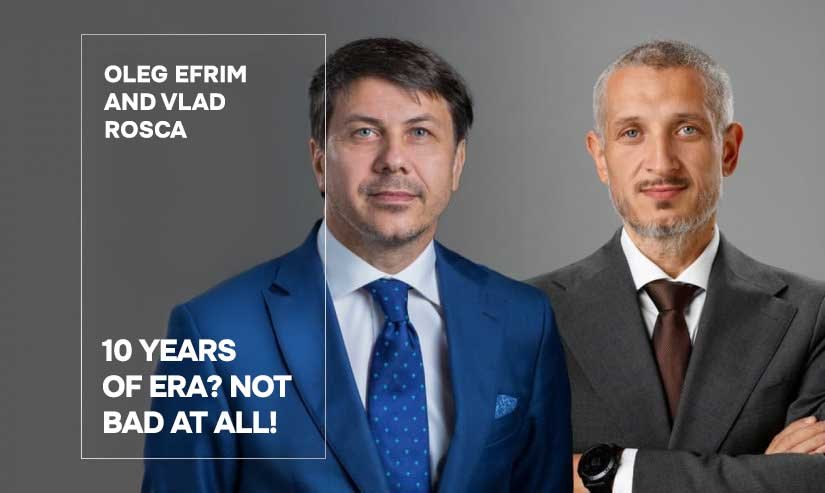

An interview with Oleg Efrim and Vlad Rosca – partners at the law firm Efrim, Rosca si Asociatii (ERA)
In 2025, the law firm Efrim, Rosca si Asociatii turned 10 years old. This anniversary – along with the dozens of cups of coffee I’ve had in ERA’s office during friendly chats with Oleg and Vlad – became the reason for this interview.
Oleg, good afternoon. We’ve known each other for so long that I feel like I have to pretend to be someone else just to ask the first question. Let’s say I’m a major foreign investor and we’re meeting for the first time. How would you introduce ERA to me?
Our firm is one of the leaders in the legal market, providing business law services. That’s how we’ve positioned ourselves from the beginning. When Vlad and I discussed founding the firm, we knew right away it would focus on business law.
But it’s not just consulting — you also go to court, right?
We provide a full range of services. Keep in mind that both Vlad and I started out as litigators.
That’s a new term for me…
A litigator is a lawyer who specializes in handling court cases and representing clients in court. Back when we started, consulting wasn’t even a thing for lawyers. If you needed to know about the tax system, you asked the tax authorities or your accountant.
So your legal career started long before ERA?
I’ve been a lawyer since 1997. In 2002, I became a partner at one of Moldova’s top law firms, but I left in 2010 — I was already serving as Deputy Minister of Justice, elections were coming up, and I had to avoid any appearance of conflict of interest.
And when did you serve as Minister of Justice?
From 2011 to 2015. It was less than a full term, but across two governments. By then, Vlad and I had known each other for a long time and had worked together. We’d been talking about starting a firm for a while. At some point, I decided to leave the government and return to legal practice in partnership with Vlad. That’s when we decided to focus on business — everything from setting up a company to handling any legal issues that might arise for investors, local or foreign.
Including criminal matters?
There’s a common term — white-collar crime. It goes a bit beyond strictly business law and into the area of business–government interactions, including official misconduct tied to business. And in my opinion, Vlad is one of the best lawyers in this field.
I know your firm has another distinction compared to most — something about being involved in drafting regulations? I don’t know the specifics, though.
That comes from our background — my experience and that of my colleagues at the Ministry of Justice. In business, it often happens that a new practice emerges before it’s fully regulated, so there’s a need to create legal frameworks that reflect new realities. That’s standard practice in lobbying business interests. The opposite also happens — government bodies or NGOs launch tenders and hire law firms to draft regulations.
I didn’t know about that side of things…
For example, we drafted a government resolution on investment contracts. This is a new practice for Moldova: a potential investor can sign an investment agreement with the government — not for tax breaks, but for guarantees.
Guarantees?
Say you’re a pharmaceutical company planning to build a plant in Moldova. You buy land without asking for incentives or tax breaks, but you need the infrastructure — roads, utilities — to reach that site. These utilities remain government property, but the government sees it as worthwhile to create working conditions for the investor. That’s the kind of relationship regulated by the investment agreement.
You were also involved in the Civil Code reform, right?
That’s not quite accurate. While I was still Minister, I signed the order to form a working group to develop the law on modernizing the Civil Code. But I didn’t personally take part after that, since I left the government — and it wouldn’t have been appropriate for me to be in a Ministry of Justice working group at that point. But the important thing is that my colleagues did excellent work. I believe we now have one of the best Civil Codes in Europe. And I can back that up: since 2019, when we suggest using Moldovan civil law in deals with foreign investors, they agree. Before 2019, I don’t remember a single case like that. Right now, for example, we’re handling a major transaction with a foreign investor, and they agreed to use Moldovan law — not the law of some European country, as used to be the norm.
Speaking of major deals — given your anniversary, I can’t help but mention that ERA handled the biggest deal in Moldovan history: Sony’s acquisition of Ellation Holdings from Warner Media. If I’m not mistaken, the deal was worth around $2 billion?
You’re right. Of course, not all $2 billion was tied to Moldovan assets. Still, it was a record-breaking deal in terms of value — but we’d already handled some pretty big cases before that. For example, we represented the government in the sale of Moldova Agroindbank and Moldindconbank, the two largest banks in the country. That was a unique situation: the former owners’ shares were annulled by the National Bank, so the state temporarily became a shareholder and later sold the shares to a new investor. By the way, the deal with MAIB was recognized at the European level as Moldova’s deal of the year. That case was special to me not just legally, but as a matter of trust in our team.
So I could joke that you’re helping boost investor trust in Moldova?
I wouldn’t even call that a joke. It’s part of our mission — to make Moldova more predictable for investors. And we don’t just work with global giants. Mid-sized businesses are regular clients of ours — especially deals in the €300,000 to €500,000 range. We don’t turn those clients away.
So it’s not just the scale that interests you, but the structure of the deal too?
Absolutely. Even a small M&A deal can be a complex legal puzzle: capital structure, property guarantees, regulatory approvals. That’s where professionalism really comes through.
You mentioned professionalism, so here comes a bit of a promotional question. What are the top three principles of your firm?
The first — and most important — is professionalism. That means knowing the law, yes, but also impeccable ethics. Second, independence. We don’t owe anything to anyone but our clients. And third, respect. For the client, the partner, every team member. We’re building a culture where the person matters more than the title, and results matter more than ego.
Ten years behind you. What’s next?
More responsibility. We’ve built a reputation — now our task is to scale it. We want ERA to become even more recognizable, not just in Chișinău, but on the international market. We’re open to partnerships, to cross-border projects — and most importantly, we haven’t lost our drive.
Can I ask a personal question?
Of course.
I often see your running photos on social media. How many kilometers have you run over the course of your legal career?
If I round up — I’m close to having run the circumference of the Earth. A couple thousand kilometers a year, almost ten years. But it’s not about the numbers. It’s about the habit — the structure, the discipline, the pace. Just like in legal practice — it’s not about running fast and blindly, it’s about running long and precisely.
And if you imagine the finish line — where are you?
Somewhere in Italy. A small restaurant. I’m cooking lunch for friends. In shorts, a Vespa parked out front that I rode to get groceries, a glass of wine in my hand. It’s not a retreat — it’s a continuation. Just at a different rhythm.
I say goodbye to Oleg and shift to Vlad. Same office, four hours later.
Vlad, good afternoon. Historically, I’ve spoken more often with Oleg. Tell me your side of ERA’s origin story…
Before ERA, I worked solo for a long time. Like they say — a lone wolf. I’d never been in public service, never looked for partnerships. I was comfortable building my own structure and taking full responsibility for it. But at some point, I realized — you can’t be effective on your own when the workload starts to stretch beyond 24 hours a day. That’s when the idea of a partnership came up.
How did you meet Oleg?
A client introduced us. He had this idea: bring together lawyers not by firm, but by personality. He invited both of us, and we started working on the same project. This was around 2005–2006. From day one, something very rare happened — synergy. He would start something — I’d finish it. I’d take the lead — he’d pick it up. That’s when the idea first came up: one day, we’d start our own firm.
But first Oleg went into politics…
Yes. And when he came back, we both knew exactly what we wanted. We had reputations — his as a former minister and experienced lawyer, mine as someone who’d been in the profession for years. We set the bar high from the start. We said: we’ll be one of the top five firms. I think now, ten years later, it’s fair to say we didn’t just make the top five — we’re solidly in the top three. And in some areas, like regulatory expertise — maybe even number one.
And when it comes to the internal structure — are your roles clearly divided?
It’s more organic than rigid. I’m more often the one in court. That takes a specific skill set — strategy, diplomacy, quick thinking. But every document goes through our “four eyes” rule. One lawyer writes, the second — a partner — reviews and approves. That’s either me or Oleg. That kind of oversight ensures the client gets flawless work.
What’s non-negotiable for your team?
We don’t just hand a client the text of the law — they can read that themselves. We offer solutions. Sometimes it’s obvious. Sometimes we have to dig deep — connecting articles, context, and legal logic. But if we don’t see a way forward, we say so. We don’t take a case just for the fee. It’s better to walk away than to give someone false hope.
And you avoid clients who come not for advice but for approval?
Exactly. If someone only wants to hear what they want to hear — they’re in the wrong place. We know how to say “no.” We can say: “If you weren’t happy with your last lawyer, you probably won’t be happy with us either.” A conflict isn’t always legal. Sometimes it’s psychological.
Oleg once joked that you didn’t just build a firm — you built a school…
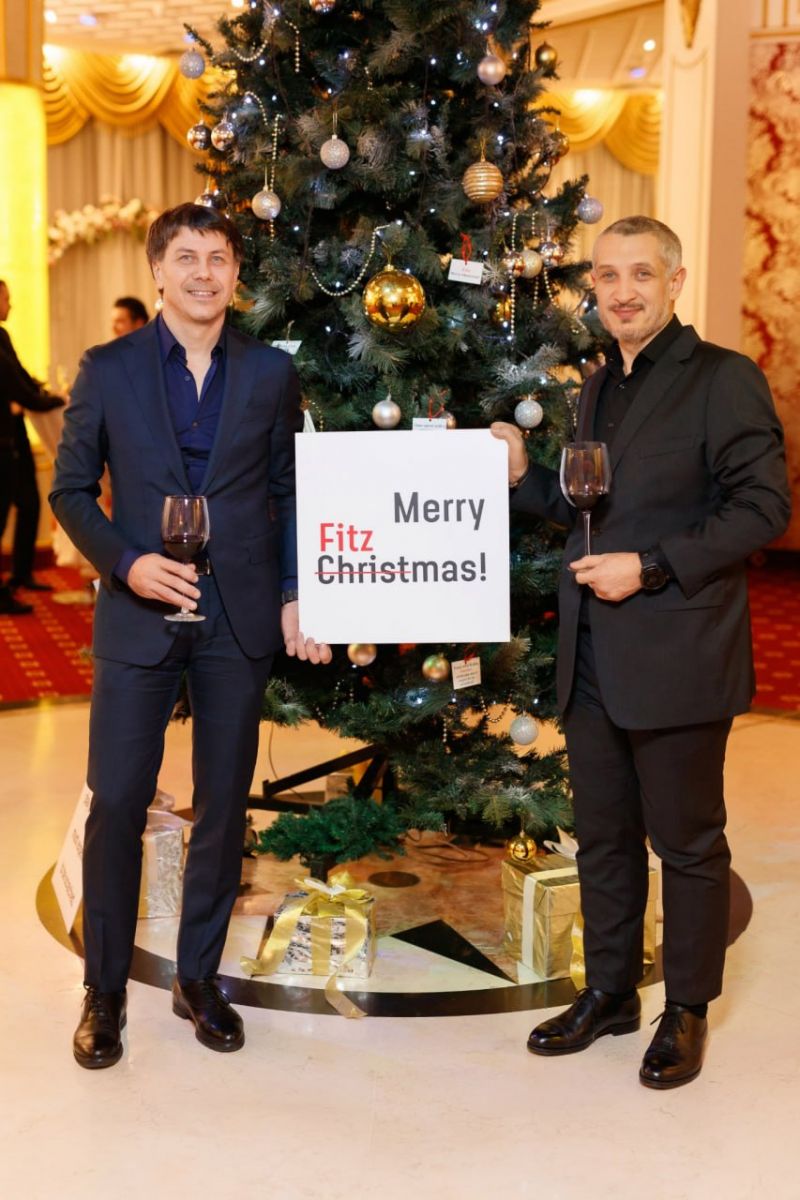
That’s true. Dozens of young lawyers have come through ERA. We’re proud of every one of them who’s gone on to become an independent professional. In fact, they’re one of the firm’s most valuable intangible assets. At the last ERA New Year party, not just our current team came — but also those who’ve gone on to work at other firms or run their own practice. Nearly everyone showed up. That says a lot — not just about the personal relationships, but about the professional culture we’ve worked to build from day one. We don’t build hierarchies — we build trust. That’s why even those who’ve moved on are still part of our professional ecosystem.
ERA in another 10 years?
Stronger. Because we’re not chasing growth for growth’s sake. We’re building trust. And in our line of work, trust is a more reliable currency than any fee.

 Life Principles


