





Interview with Nicolae Esanu, Senior Manager at Salam Mobile, Founder & CEO of Esanu and Partners
Sometimes, what seems like a coincidence in business is not really a coincidence—but rather the beginning of a pattern or a sign of a trend taking shape. Three days before my conversation with Nicolae Esanu, I had a meeting with Roman Stirbu, CEO of Simpals. We were discussing my work on building a business network in Moldova, and Roman—who now lives in Brașov—showed me a powerful new direction for developing an effective network to support Moldovan businesses.
The essence of his idea: we need to systematically start connecting businesspeople, professionals, and simply energetic individuals from the Moldovan diaspora with local Moldovan businesses that are looking for effective ways to access international markets—or need foreign expertise to grow inside Moldova.
Sure, we all have friends in the diaspora. But Roman was talking about doing this in a structured, consistent way.
This conversation was still taking shape in my mind when Nicolae Esanu reached out. I had met him back when he worked at the Moldovan startup XOR, which at the time had raised several million dollars in investment from Silicon Valley.
And what Nicolae proposed to me aligned 100% with what Roman Stirbu had just outlined. Today, Nicolae works in Saudi Arabia at Salam Mobile.
Salam is one of the top five telecom operators in Saudi Arabia, alongside STC, Mobily, Zain KSA, and Etihad Atheeb (GO). The number of awards the company has received reflects its rapid growth. In 2023, at the MVNO World Congress, Salam Mobile was named “MVNO Startup of the Year.” That same year, Salam Mobile won the Speedtest Awards in Saudi Arabia for fastest fixed network speed. And in 2024, the company was recognized as the “Fastest Growing Telecom Brand of the Year” in Saudi Arabia.
I wrote this intro hoping to “trigger” a few more of these kinds of coincidences. You never know who from the Moldovan diaspora might read this interview—and what new connections it might lead to.
Now, the interview.
Nicolae, I’ve known you for many years. The first interview I did with you was back when you had just started raising millions of dollars in funding for XOR. But why did you want to do a new interview now?
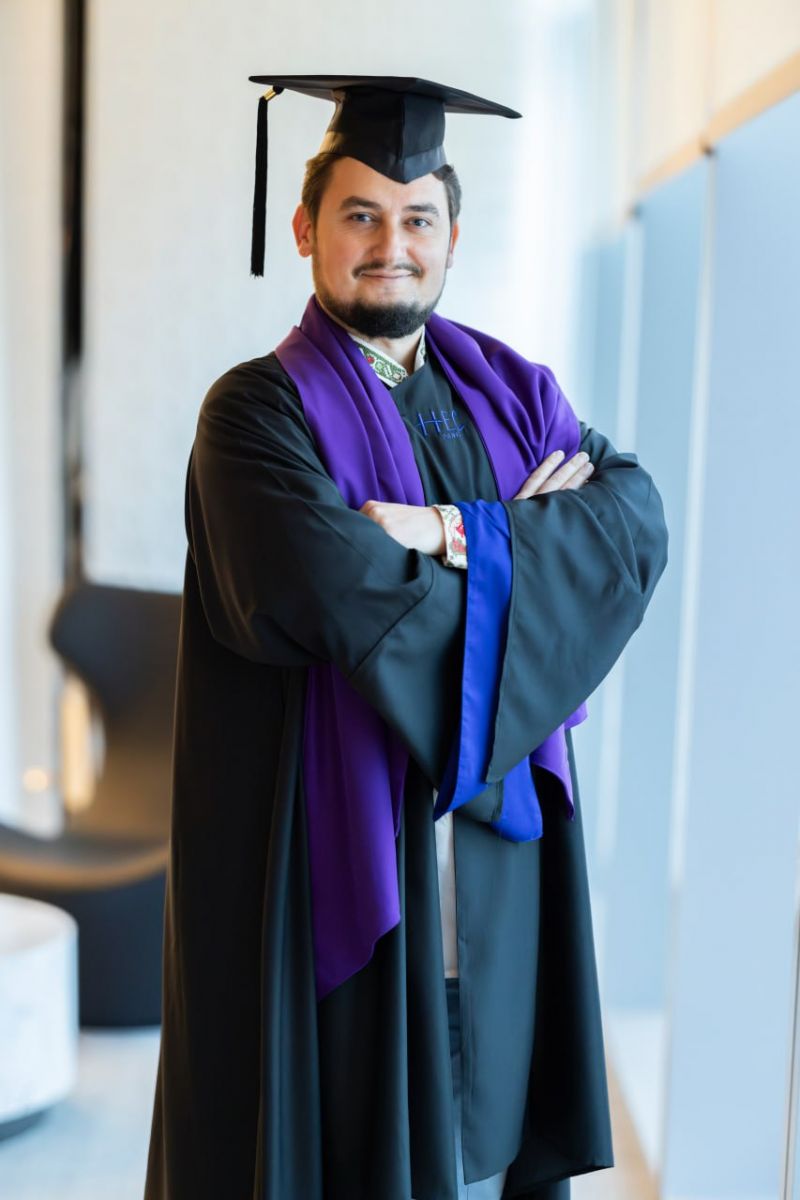
Last June, I completed the Executive MBA program at HEC Paris—and I realized just how much of a gap there is between what I know and do now and what’s currently happening in Moldova. And I decided that I want to actively contribute—through mentorship or consulting—to raising the level of professionalism and scaling of Moldovan startups and companies.
As a side note: in 2022, HEC Paris ranked #1 in the FT rankings for Custom, Open-enrolment, and Combined programs. This “triple first” was the first time any school had achieved this since FT introduced the ranking in 1999.
Let’s go over your professional background. Where did you start, and what kinds of challenges shaped you?
My first real training ground was working at Unifun. I led sales across North Africa and the Middle East. I learned what it means to adapt a product to completely different realities, to negotiate with Vodafone or Telenor, and to build solid relationships in a part of the world where “relationships” mean everything.
Then came XOR?
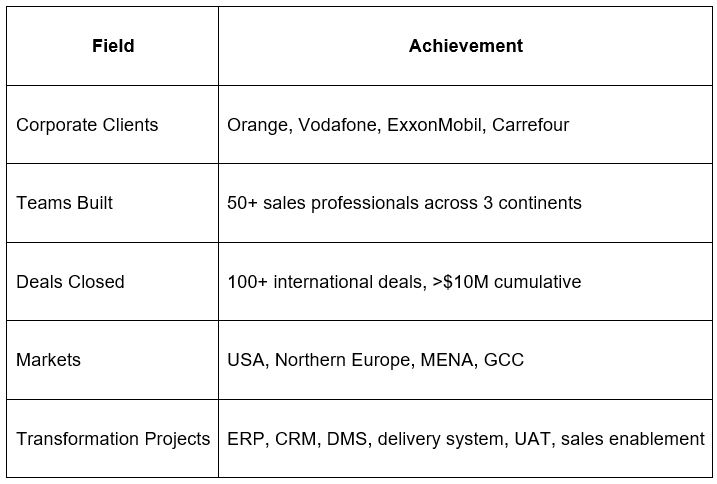
Exactly. A Moldovan startup headquartered in San Francisco. We built a global sales team from scratch—up to 28 people—and landed corporate clients like Orange, ExxonMobil, Carrefour. Within a short time, we grew sales to $250,000 a month.
At XOR I learned what a real “go-to-market” strategy looks like—how to segment markets, how to iterate fast based on feedback. Those are critical lessons for any Moldovan company that wants to step out of its comfort zone.
What came after XOR?
I worked as a business development consultant at IT Works Moldova, which is based in New York. Essentially, we built the entire commercial process from the ground up: sales scripts, CRM, AI-driven lead generation, and sales funnel tracking.
If a Moldovan IT company wants to sell its product on international markets, it needs to learn this process. It’s not just about making a great cold call—it’s about structure, data, systems, and strong consistency.
And now? What are you doing in Saudi Arabia?
I’m a senior manager at Salam Mobile, where I helped launch an MVNO (mobile virtual network operator) and scale it to 2 million customers. I lead Sales Operations and the Consumer PMO. Right now, we’re preparing for an IPO—so I’m involved in strategy, operations, PMO, and digital transformation.
What I’ve done there can be applied elsewhere: structuring the digital back office, integrating with ERP, building dealer management systems, optimizing retail and digital sales departments, launching automated delivery projects, and so on.
Do you think your experience can be applied in Moldova?
That’s exactly where the added value lies. Moldova doesn’t need a “consultant from Chisinau.” It needs someone who’s achieved results in different contexts, worked with complex systems, and done business across cultures.
A Moldovan startup that wants to sell in the U.S., Germany, or Dubai needs a mindset that’s “ready to go global.” And that comes from experience—not from books.
Where do you see the biggest opportunities for Moldova?
Three areas. First, software exports—but with a clear strategy, not just hourly developer work. Second, SaaS products—Moldova has real potential to launch global services. And third, local digital transformation—many local companies need better processes, CRMs, and a strategic vision.
These are exactly the areas where I can help: structuring sales teams, validating business models, and preparing for global market entry.
Do you already have experience working with Moldovan companies on these topics—or is this your plan for the future?
I already have. From November 2024 to March 2025, I worked as a strategic advisor for the B2B and e-commerce division of StarNet. We redefined market segments, built a new commercial approach, and strengthened the link between the technical and sales teams.
I won’t lie—it felt really good when, at the end of the project, I received detailed recommendations from StarNet’s owner, Alexandru Macedon. If a major player like StarNet saw value in the work, that means there’s room to make a real impact in other companies too.
What does the future look like for you? Are you planning to move back to Moldova?
I’m not planning a “classic” return. But I do want to be actively involved in Moldova—through consulting, mentorship, or partnerships. I can work remotely, visit periodically, and connect local startups with my networks in the Middle East and Europe.
In five years, I want to be able to say: “We helped build 10 Moldovan companies that export world-class products and services.”
What are the most common mistakes you see in Moldovan companies?
No scalable sales strategy. Salespeople wearing too many hats, but without clear goals. No clearly defined value proposition. No real CRM—Excel isn’t enough anymore. No link between marketing, product, and sales.
All of this is fixable. But it takes structural thinking. And sometimes it takes an outside perspective to bring clarity and objectivity.
Let me ask you frankly—we live in a time when everyone’s talking about digital transformation, AI... But in reality, 90% of it sounds like a beautifully packaged dream. How do you tell the difference between a real trend and a bubble?
That’s exactly the question that’s been on my mind the most over the past two years. For me, the difference lies in what’s happening on the ground.
That’s also why I accepted invitations to speak and moderate at major international conferences like the Digital Experience Show Riyadh 2023 and Customer Experience Live Show Dubai 2024.
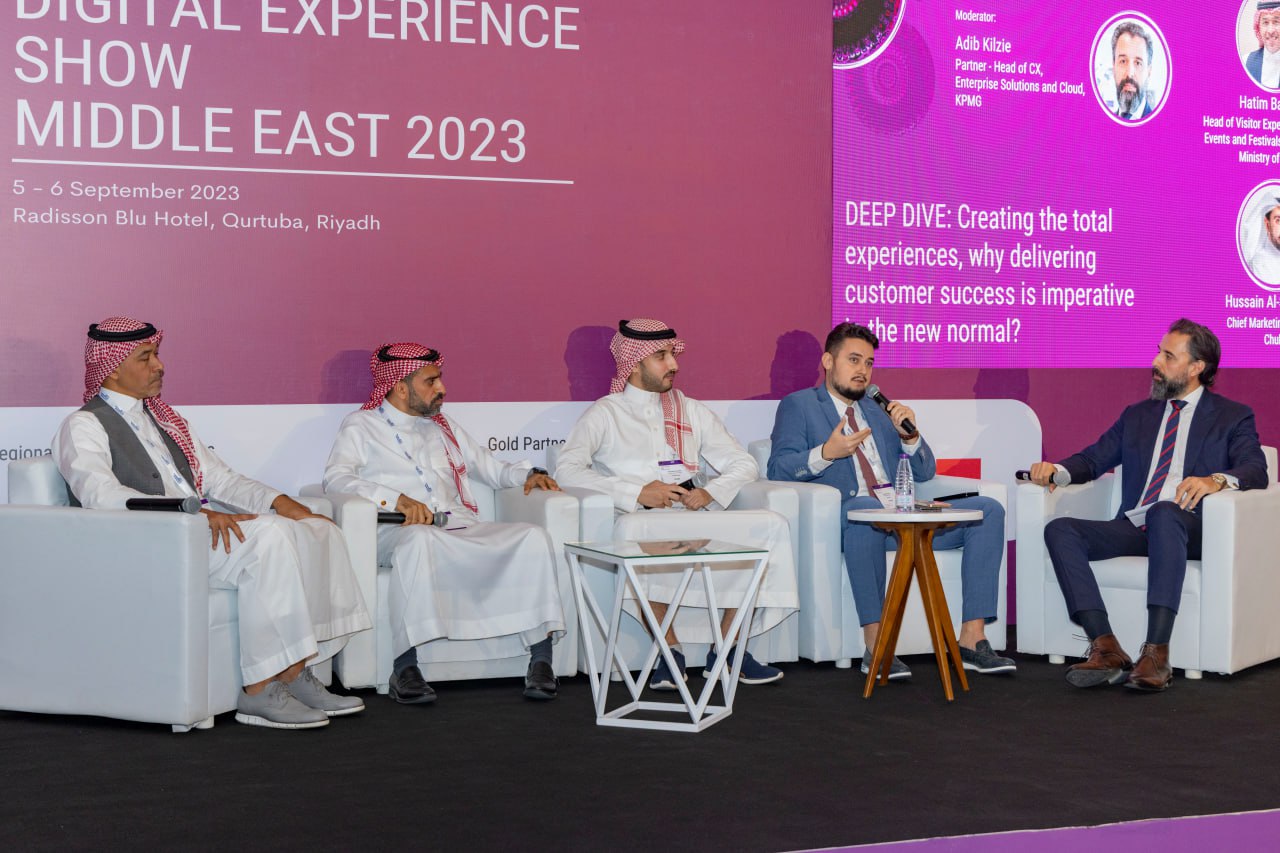
Connect for me the on-the-ground reality and your participation in these conferences.
I took part in those conferences to share my perspective—what I learned building an MVNO from scratch, how I scaled remote sales teams, how I integrated complex systems into a company preparing for IPO.
I wanted to test my ideas in front of people who think at the scale of a country—or a bloc of countries. But honestly, the most valuable part wasn’t holding the microphone. It was the conversations afterward.
When an innovation director from the GCC tells you, “What you achieved in six months, we couldn’t have done in two years,” you realize these are insights worth bringing back home.
I don’t see myself as someone who follows trends. I prefer to stick to what works—and improve what I can pass on to others. And yes, that sometimes means tuning out the noise and coming back to the basics: What real problem are we solving? How do we measure progress? Who’s the actual customer?
You work hands-on in the field, but you also study at one of the top schools in the world. You interact with professors from HEC Paris and with people from Amazon and NVIDIA. Be honest—what are you really learning? What’s actually useful, and what’s just “Silicon Valley showmanship”?
That’s a great question—and to be honest, I’m still figuring it out. It’s one of the reasons I decided to specialize in “Digital Transformation” as part of the Executive MBA program at HEC Paris.
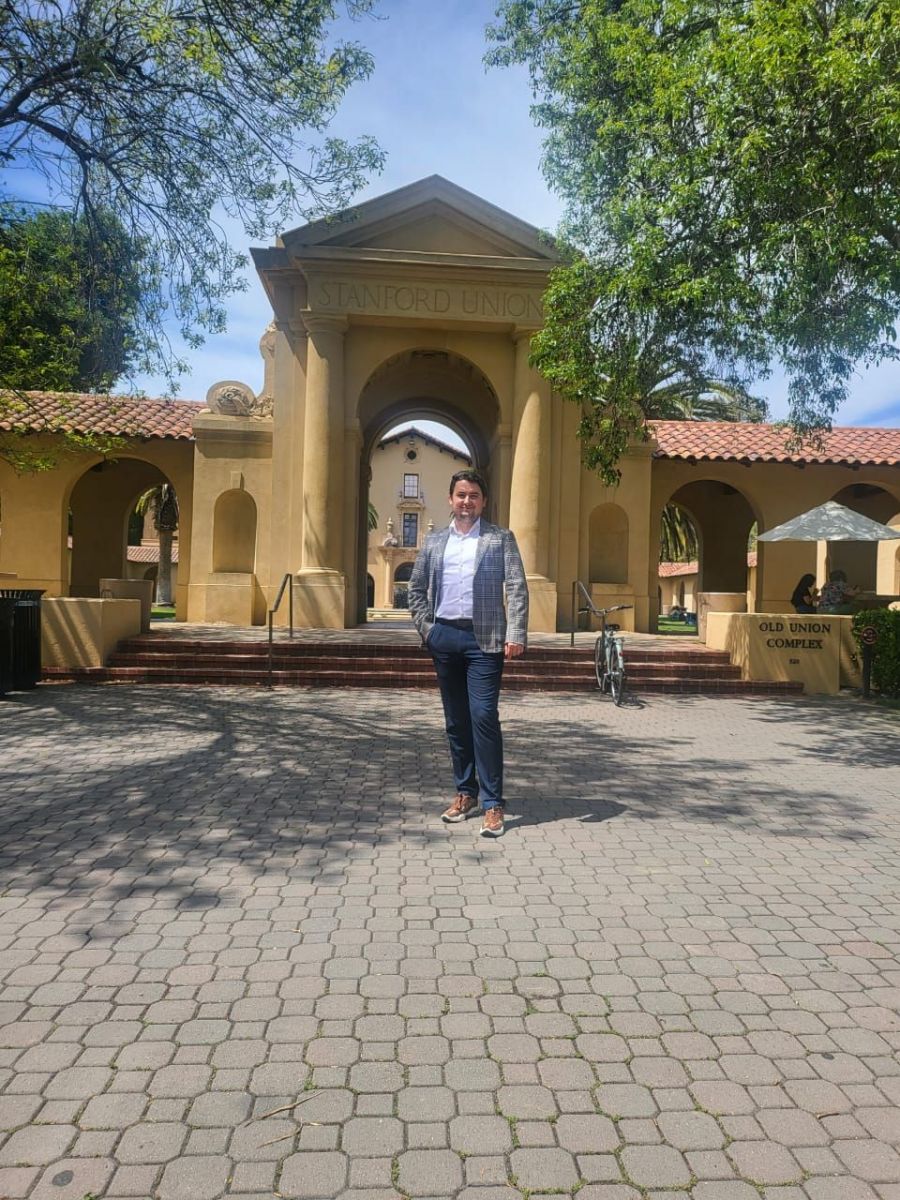
I spent an intense week on the U.S. West Coast, attending advanced sessions at UC Berkeley (Haas) and Stanford Graduate School of Business. I had the chance to talk with leaders from Google, Amazon, Ford, H&M, NVIDIA, and Autodesk.
It wasn’t just inspiring—it was eye-opening. I learned directly from top executives how global companies are rethinking their internal processes when implementing AI, how they’re reshaping external strategies to build scalable digital products, and how to create a culture of real innovation—not just theater.
Digital transformation isn’t about buying software. It’s about rethinking how people, systems, and processes work together. And that’s true whether you’re in Silicon Valley, Dubai, or Chisinau.
This experience reconnected me with the idea of responsibility as strategy—not just for a company, but for the community you come from. That’s why I hope everything I’ve accumulated over the years can help Moldovan companies take their next step.
We no longer need to ask whether AI is coming. It’s already here. But from your perspective—will AI really be a revolution in B2B sales, or is it just a well-packaged distraction?
That’s a tough question—but also an honest one. And it’s the exact question every company should be asking before adding yet another tool to their tech stack.
What I’ve learned—from startups in the U.S., from Gulf region projects, from companies going through digital transformation—is that AI isn’t a shortcut. It’s a mirror. It shows you how well you’ve structured your processes and how solid your team really is.
AI only becomes truly valuable when it’s used alongside human intelligence—not instead of it.
What do we see in 2025? Companies automating lead generation, generating decks with one click, tracking every reaction using AI. But if you don’t have a team that knows how to interpret signals, sense timing, adapt messaging... it all becomes noise.
AI might tell you when to call—but it can’t tell you how to speak. It can’t build trust, read emotion, or create context.
How do you approach working with AI?
I work with teams. I help them understand how they can use AI to save time—while still holding on to their core human roles: decision-making, relationship-building, intuition.
And I’m a strong believer in continuous learning. Every company I’ve worked with—from startups to Salam Mobile—needed the same thing: to invest in people, not just software.
That’s why I actively promote digital and AI literacy—not just within technical teams, but across sales, marketing, and product departments.
As far as I can see, the future will belong to companies that know how to put people at the center—and make AI serve them, not the other way around.
Nicolae, I want to shift part of my interviews into something more actionable—so that the outcome isn’t just informing the audience, but also creating real business collaborations. Let’s end this interview with a clear offer.
Let’s do it. I have two.
First, let’s organize my background in a table. That’s just more practical, right? Something like this:
And the second offer?
The first five companies that reach out and simply say “We’re from Zingan” will get a bonus one-hour strategy session with me—focused on diagnosis: where you are, what’s blocking your growth, and what steps you can take toward smart scaling.
How can people contact you?
Via LinkedIn or at [email protected]

 Life Principles


